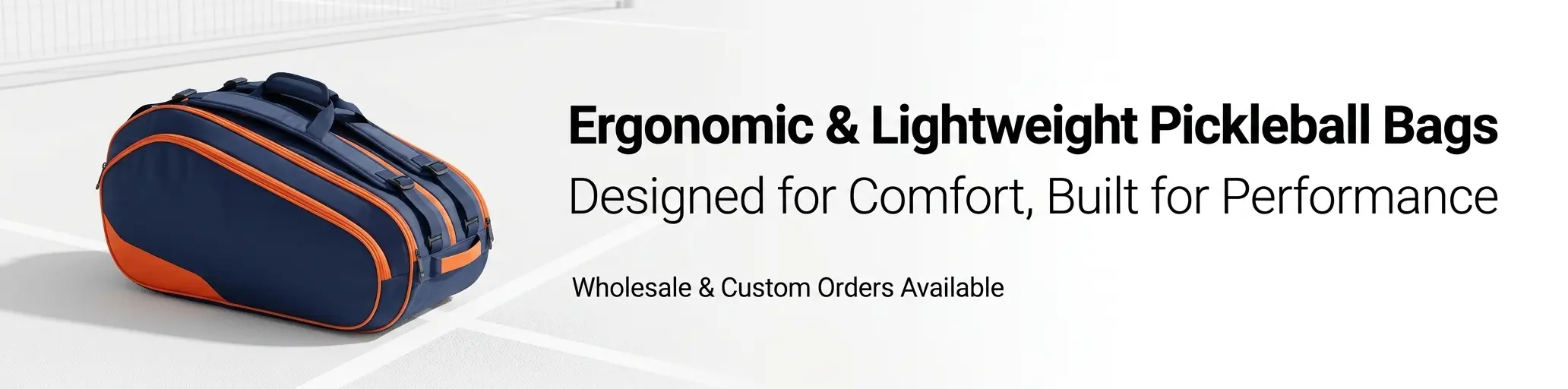
Ergonomics Banner

HG Pickleball – Ergonomics & Weight | Engineering Comfort

How we design bags that feel right from warm-up to final match. Ergonomic carry for players, staff, and events.

Tournament days are long. Players, staff, and officials move between courts, hotels, shuttles, and venues – often with a bag on their shoulder or in their hand the entire time. We design every HG Pickleball bag around real carry time, load, and movement, so it feels like the right tool for the day, not a burden.
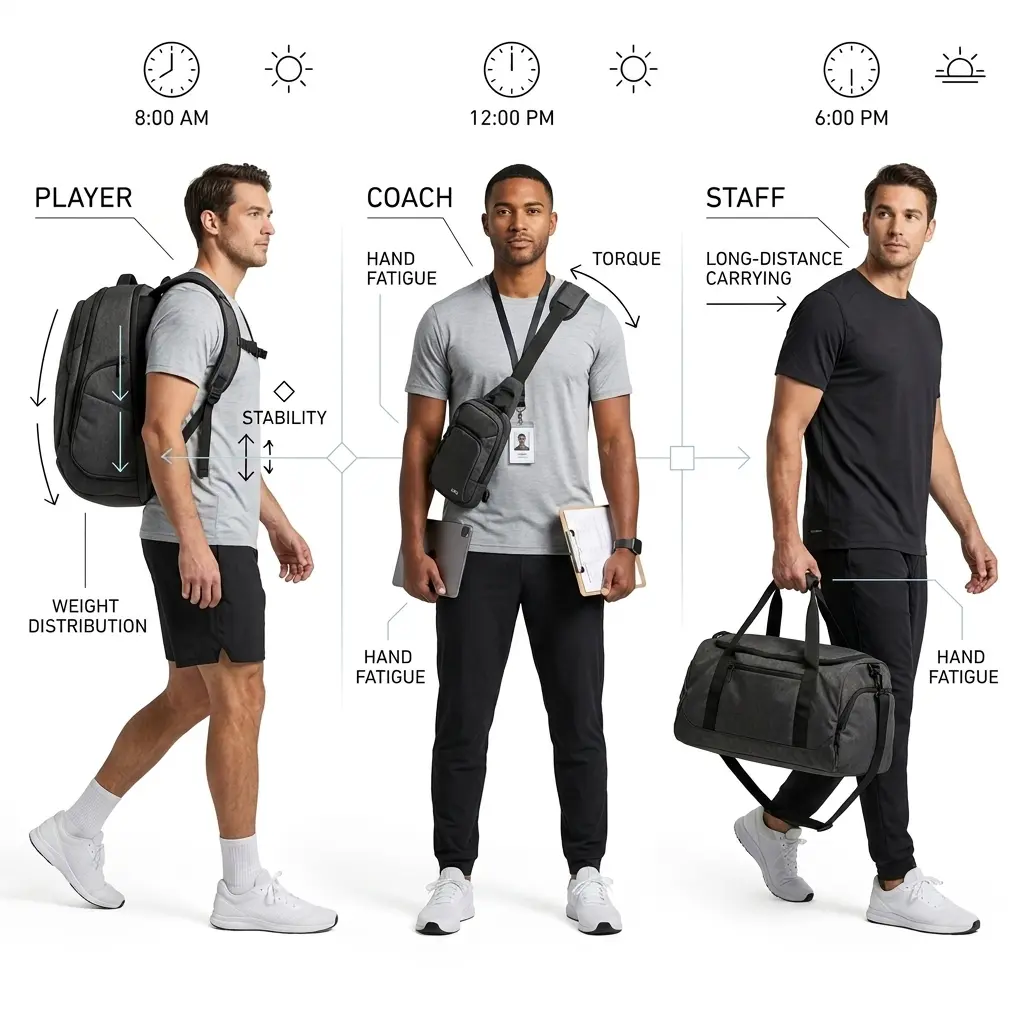
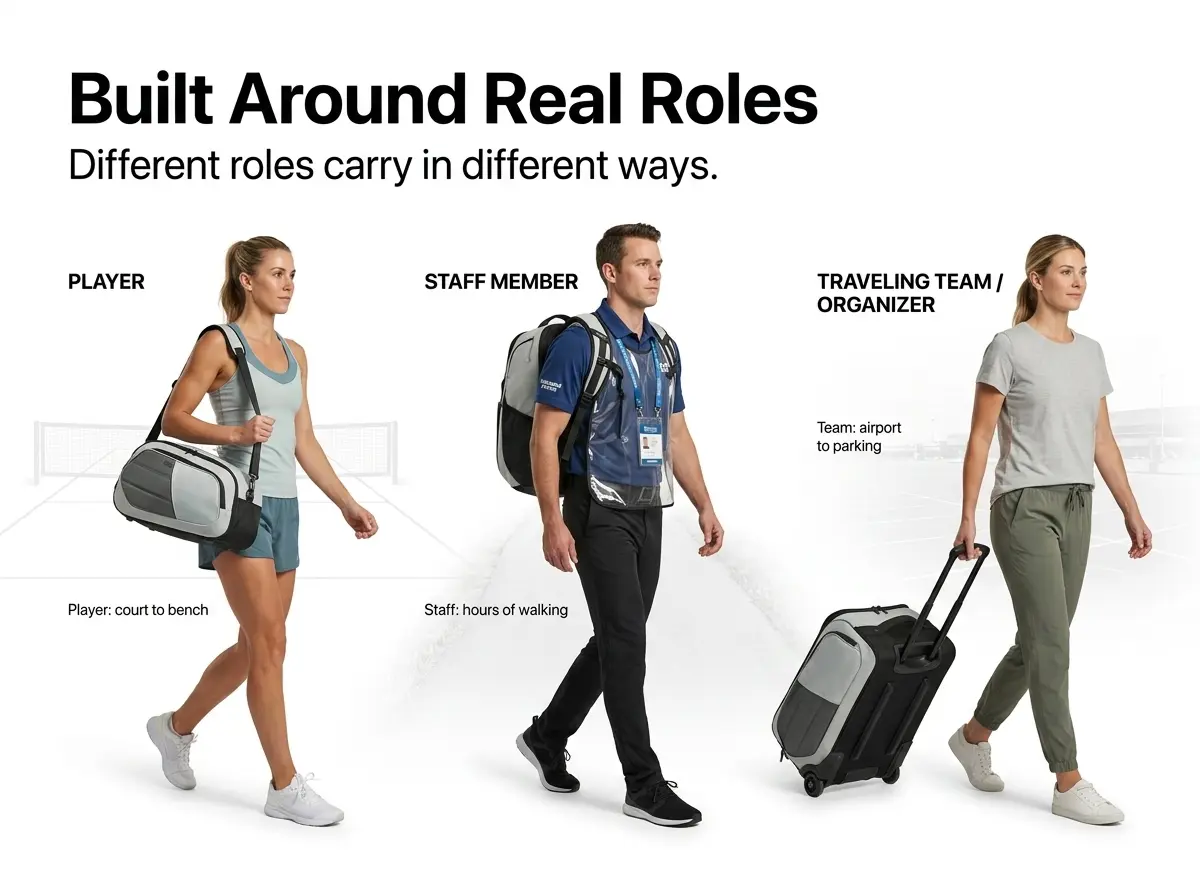
Professional B2B hero image featuring three distinct roles—a pickleball player, a tournament staff member, and a traveling organizer—demonstrating various ergonomic carrying styles of modern pickleball bags including shoulder, backpack, and trolley designs for different usage scenarios

Section 1 – Built Around Real Roles

Different roles carry in different ways. A player only needs to move between court and bench, while a staff member may walk the venue for hours, and a travelling team needs to cross airports and parking lots. We start by mapping how each role carries their bag – on the back, in hand, or on wheels – and then shape the overall form and structure around that pattern.

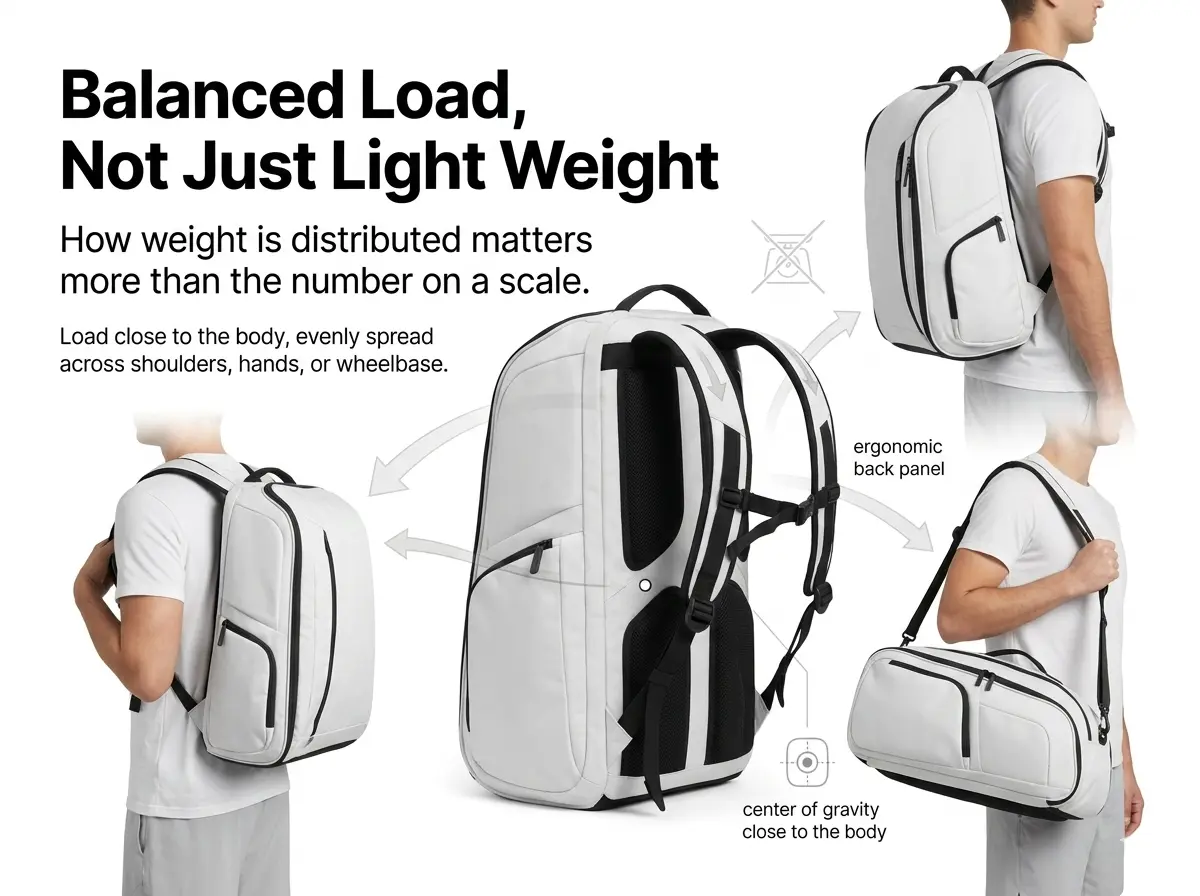
A professional B2B product showcase of an ergonomic pickleball bag designed for balanced weight distribution, highlighting how a center of gravity close to the body improves comfort during long-term use for players and staff

Section 2 – Balanced Load, Not Just Light Weight

A bag that is light but unbalanced still feels heavy by the end of the day. We focus on how weight is distributed, not just the number on a scale. Panel geometry, pocket placement, and padding all work together to keep the load close to the body and evenly spread across both shoulders, hands, or wheelbase, so the bag feels more stable in motion.

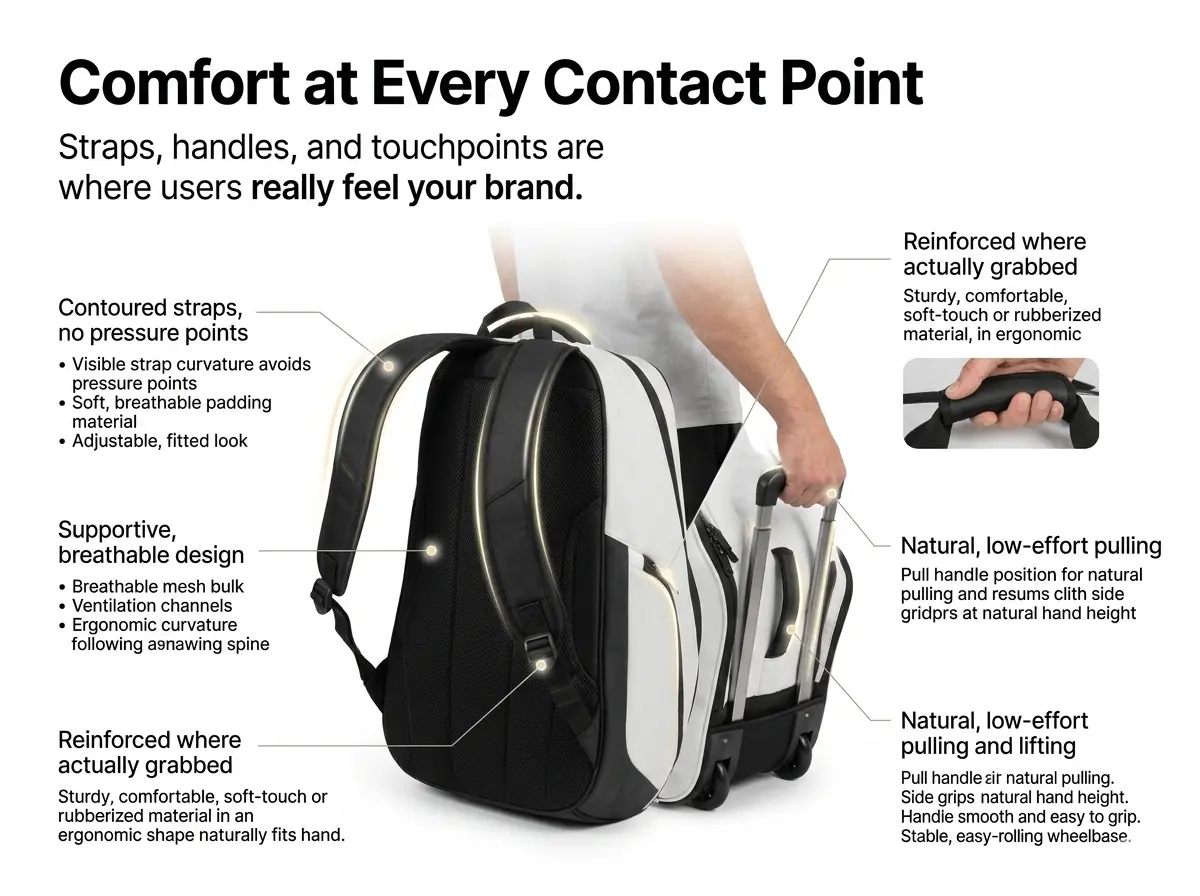
A professional B2B product showcase detailing the ergonomic comfort features of a pickleball bag, highlighting contoured shoulder straps, breathable back panel ventilation, and reinforced hand grips designed to eliminate pressure points and improve user experience

Section 3 – Comfort at Every Contact Point

Straps, handles, and touchpoints are where users really feel your brand. Shoulder straps are shaped to avoid pressure points, back panels are designed to stay supportive without trapping heat, and hand grips are reinforced where they are actually grabbed. On wheeled bags, pull handles and side grips are positioned for natural, low-effort pulling and lifting.

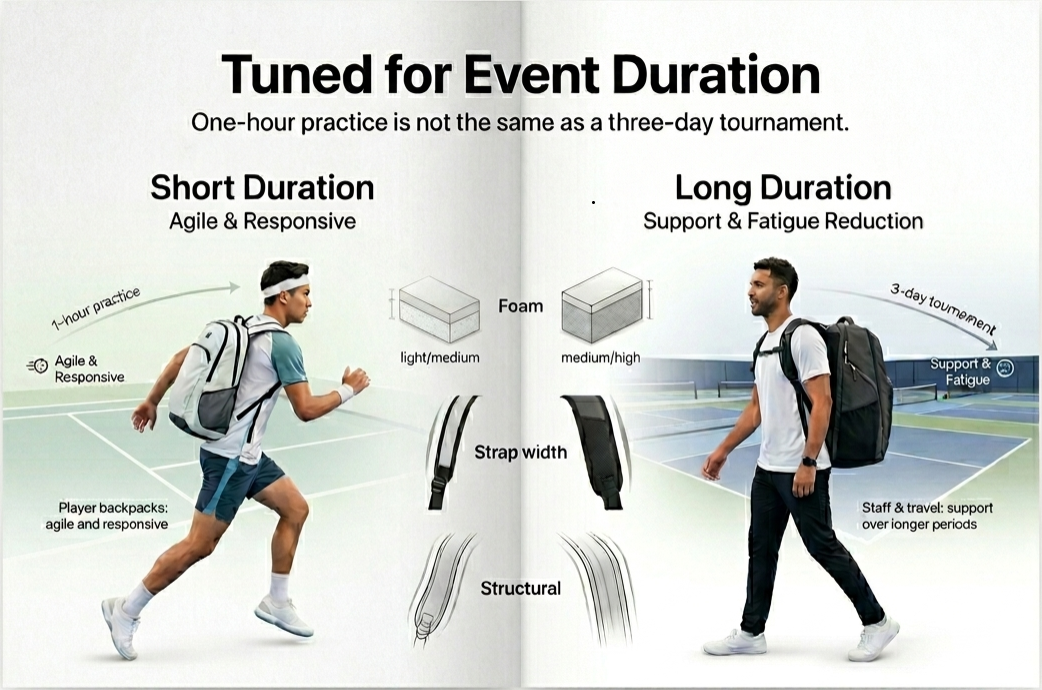
Duration tuned

Section 4 – Tuned for Event Duration

Carrying a bag for a one-hour practice is not the same as carrying it through a three-day tournament. We tune foam densities, strap widths, and structural stiffness according to expected use duration. Player backpacks stay agile and responsive, while staff and travel solutions prioritise support and fatigue reduction over longer periods of wear.

Why HG Pickleball Ergonomics?

We test our bags with real players, staff, and organizers across full tournament days—not just in controlled lab conditions. This shows how comfort, fatigue, and carry habits actually change from the first match to the final game.

Real‑Role Testing

We test bags with real players, staff, and organisers across full tournament days – not just in controlled lab conditions. This lets us see how comfort, fatigue, and carry habits actually change from first match to final game.
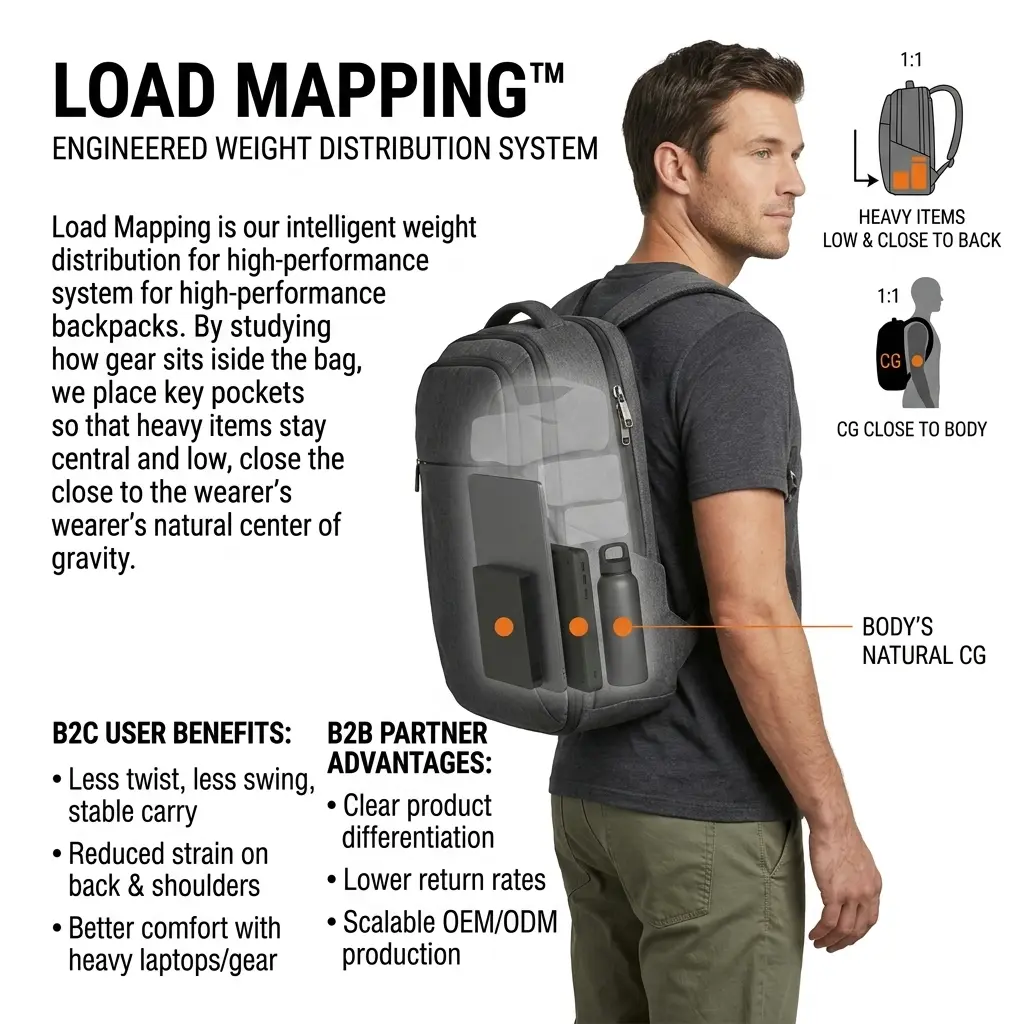
Technical diagrammatic photo of Load Mapping™ system in a backpack, demonstrating the optimal internal organization of heavy items near the center of gravity to improve ergonomic stability and user comfort

Load Mapping

We study how gear sits inside the bag and place key pockets so weight stays central and low, close to the body's natural centre of gravity. That means less twisting, less swinging, and a more stable carry when the bag is fully loaded.
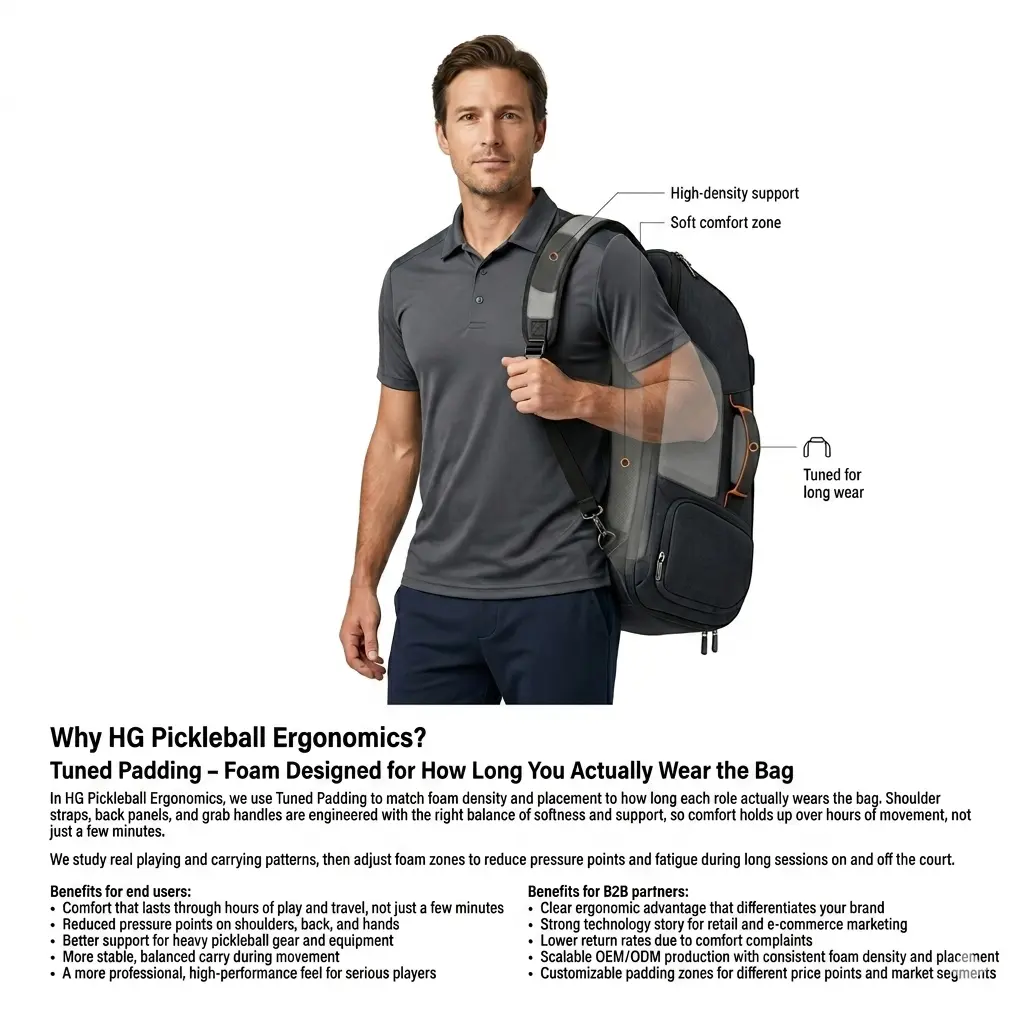
A professional product photography image for HG Pickleball ergonomics, featuring a model wearing a high-performance pickleball backpack. A semi-transparent overlay highlights the 'Tuned Padding' technology, showing varied foam density zones in the shoulder straps and back panel designed to improve comfort and support for long-duration wear. The lower section details B2B and B2C ergonomic benefits including reduced fatigue, optimized weight distribution, and scalable OEM production advantages

Tuned Padding

Foam density and placement are tuned to how long each role actually wears the bag. Straps, back panels, and grab handles get the right balance of softness and support, so comfort holds up over hours of movement, not just a few minutes.
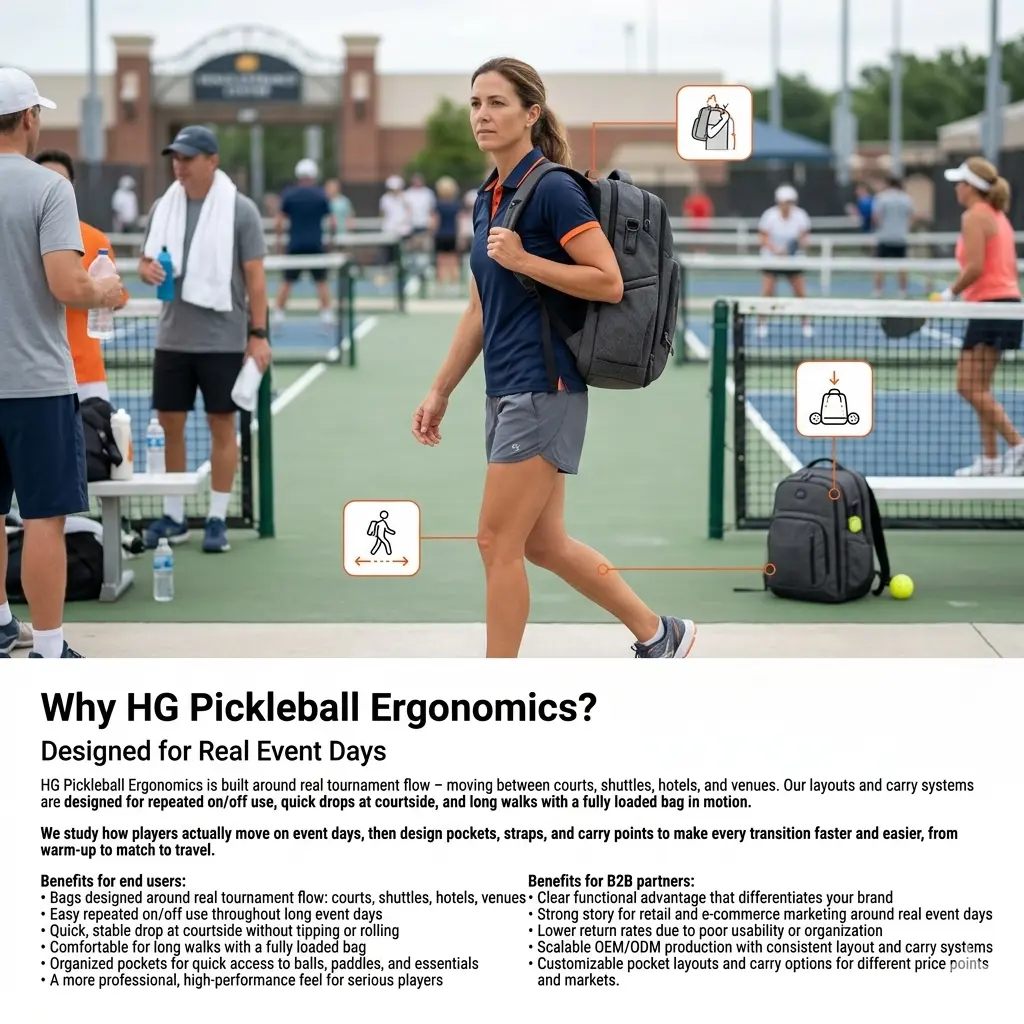
Designed for pickleball players and teams competing in real tournament events across North America and Asia. Whether you're playing at local community courts, regional championship venues, or international event sites, this bag is built for the full event day flow: moving between courts, shuttles, hotels, and venues.

Ideal for players in Singapore, the US, Canada, and other regions with active pickleball tournament circuits.

Designed for Real Event Days

Layouts and carry systems are built around real tournament flow – moving between courts, shuttles, hotels, and venues. We design for repeated on/off use, quick drops at courtside, and long walks with a fully loaded bag in motion.
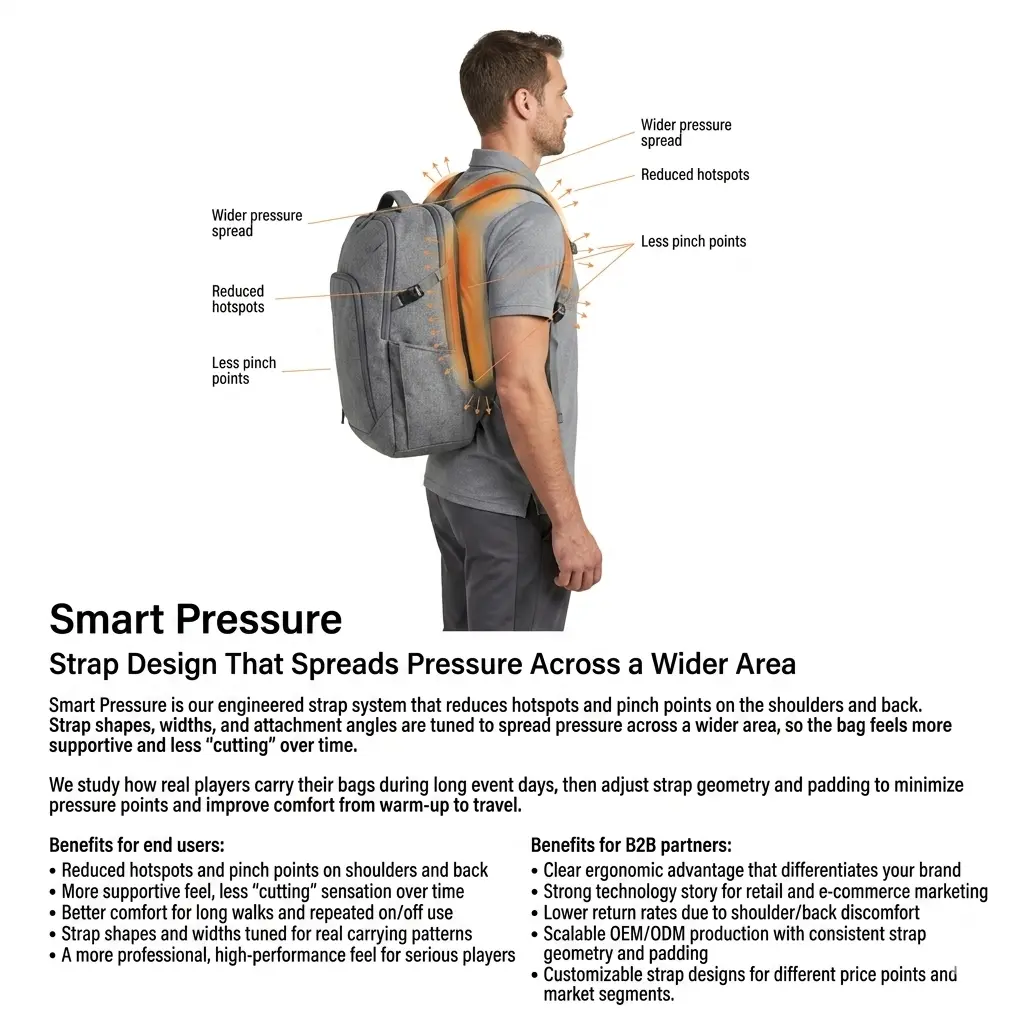
Real model wearing a pickleball bag with Smart Pressure strap design, engineered to spread pressure across a wider area of shoulders and back, reducing hotspots and pinch points for more supportive, less cutting comfort over time.

Smart Pressure

Strap shapes, widths, and attachment angles are tuned to spread pressure across a wider area of the shoulders and back. This reduces hotspots and pinch points, so the bag feels more supportive and less "cutting" over time.
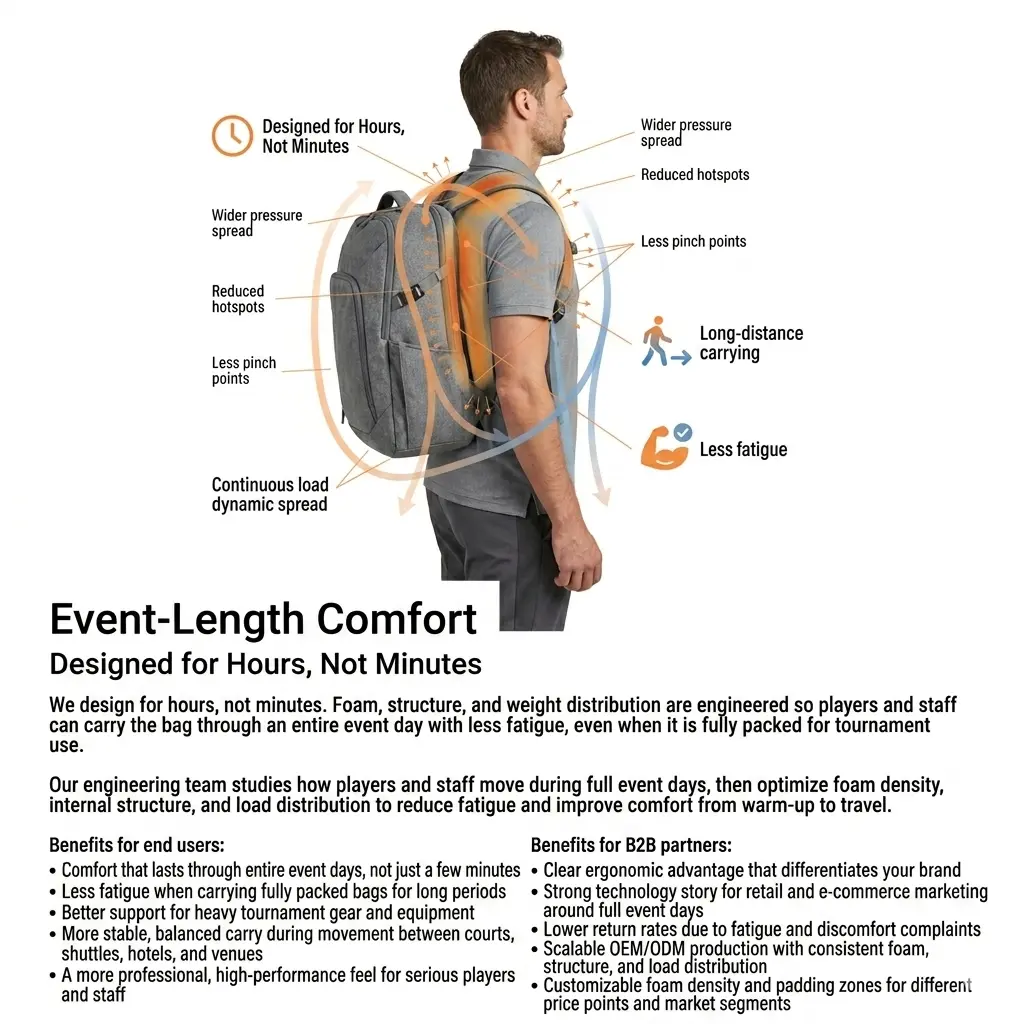
Real model wearing a pickleball bag with Event‑Length Comfort design, engineered for hours not minutes, with foam, structure, and weight distribution to reduce fatigue during full event days when fully packed for tournament use.

Event‑Length Comfort

We design for hours, not minutes. Foam, structure, and weight distribution are engineered so players and staff can carry the bag through an entire event day with less fatigue, even when it is fully packed for tournament use.
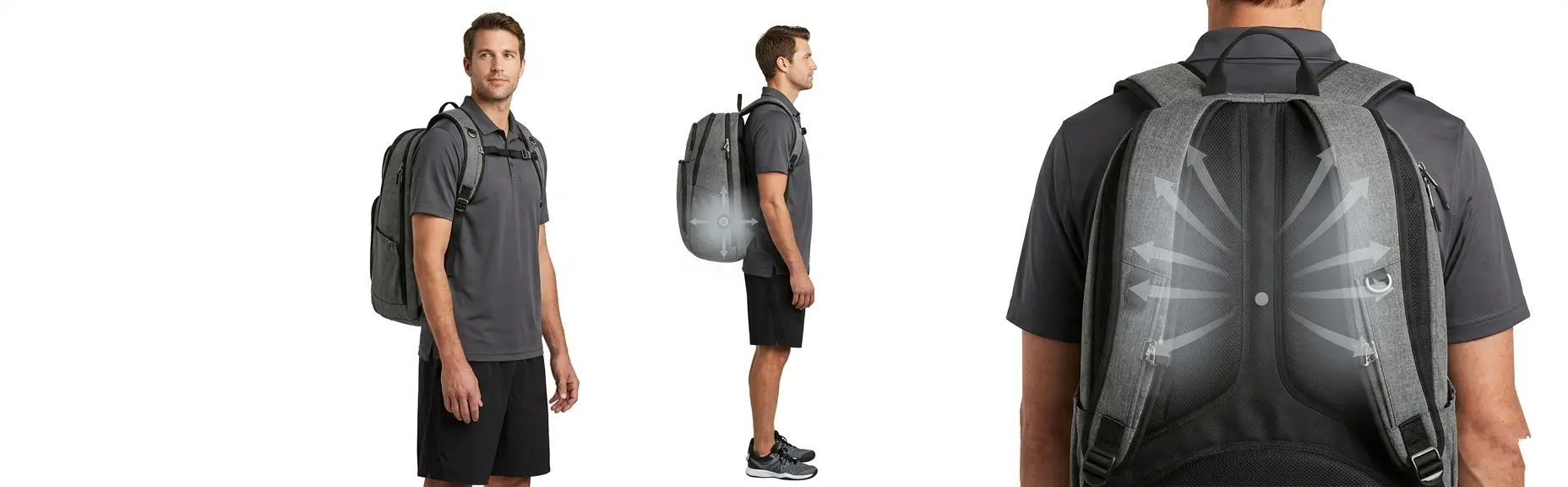
One real human model with one pickleball bag shown in three view angles (front, side, back close-up) on a 16:5 banner, demonstrating ergonomic shoulder strap design and weight distribution with central & low heavy gear area and CG marker.

How We Design for Comfort

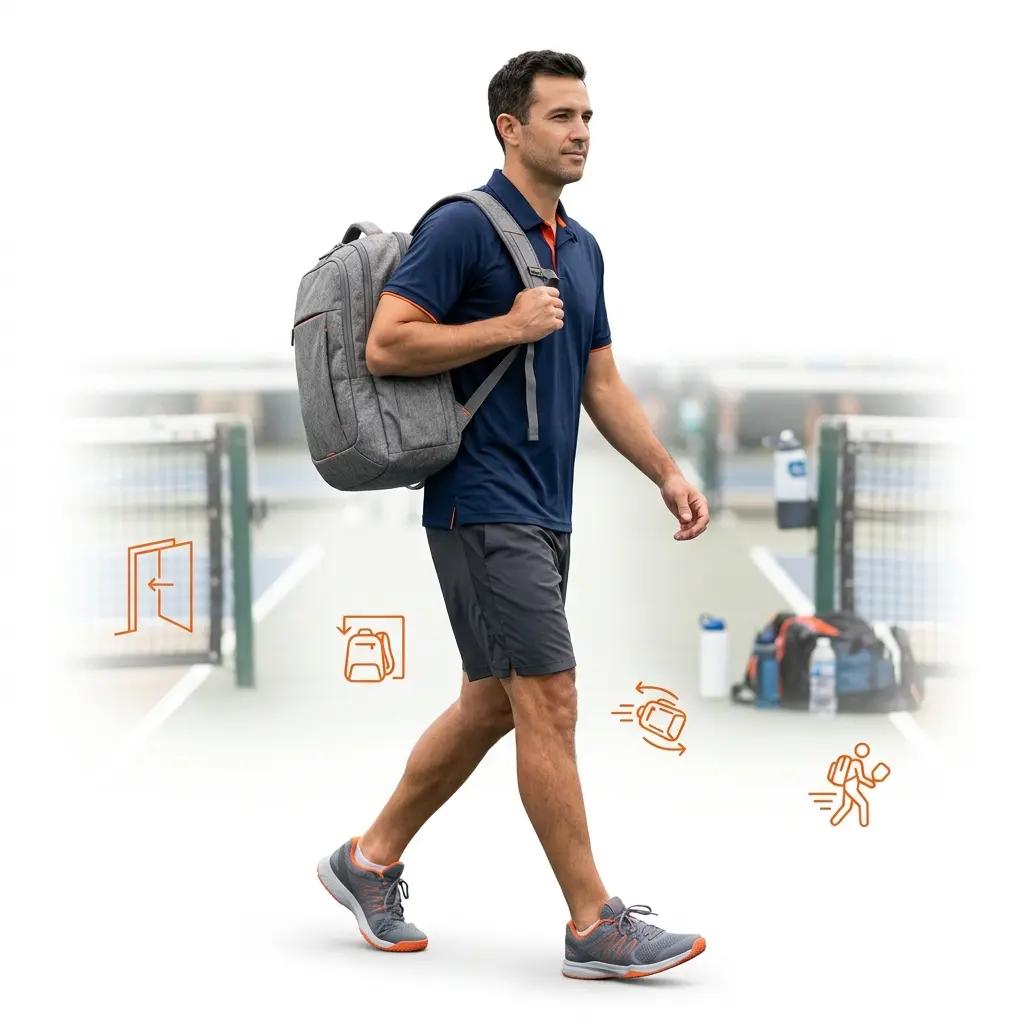
Real model walking past a pickleball court or venue with a role-specific designed bag, shaped around how a specific user actually carries it: walking courtside, moving through a venue, or travelling between events with a full load.

Role‑Specific Design

Each bag is shaped around the way a specific user actually carries it, whether that means walking courtside, moving through a venue, or travelling between events with a full load.
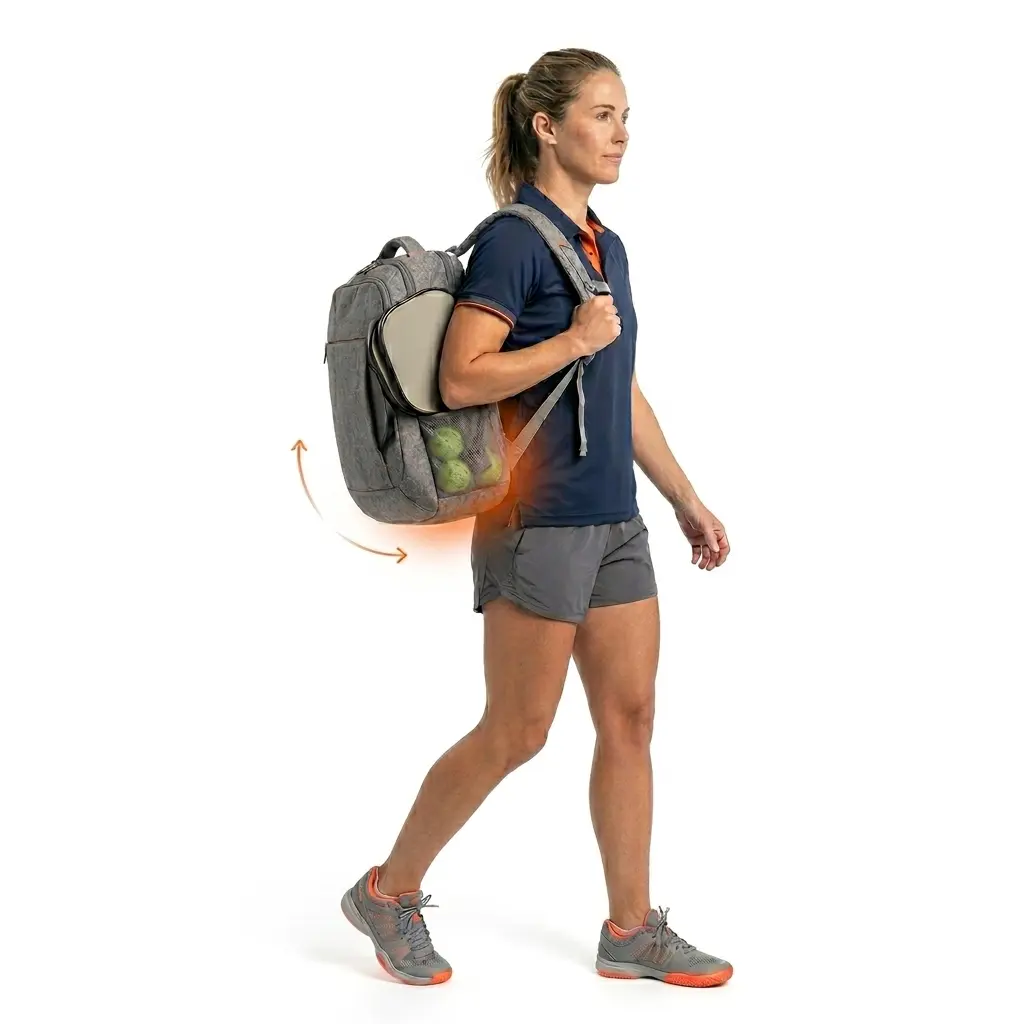
Real model walking with a pickleball bag containing stable paddles and balls, with Dynamic Load Shift design keeping the load stable as the bag moves, staying balanced when walking, turning, lifting, or setting down throughout the day.

Dynamic Load Shift

We place compartments and structure to keep the load stable as the bag moves, helping it stay balanced when users walk, turn, lift, or set it down throughout the day.
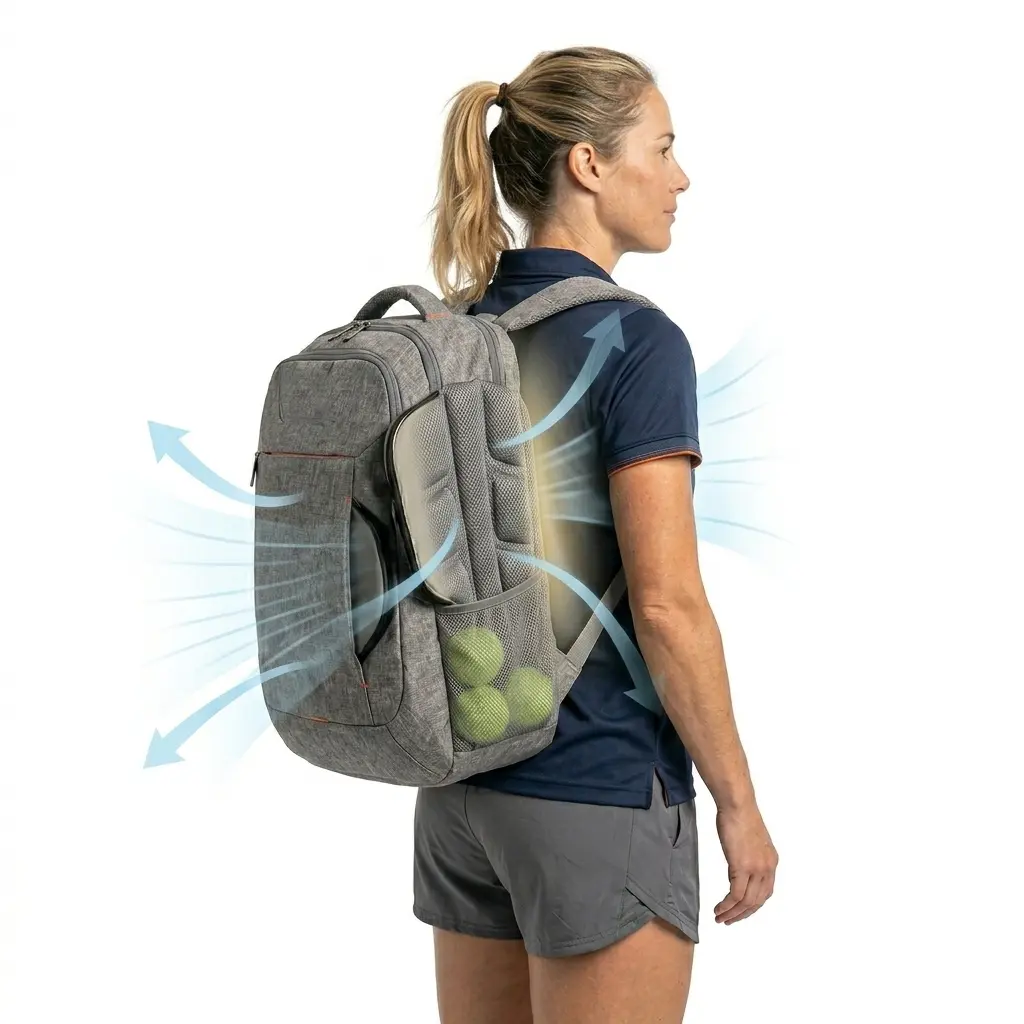
Real model wearing a pickleball bag with ventilated back panel design, showing airflow channels and heat dissipation for comfortable support during long event days in warm conditions without trapping too much heat.

Ventilated Support

Back panels and contact areas are built to support the body without trapping too much heat, helping the bag stay more comfortable during long event days in warm conditions.
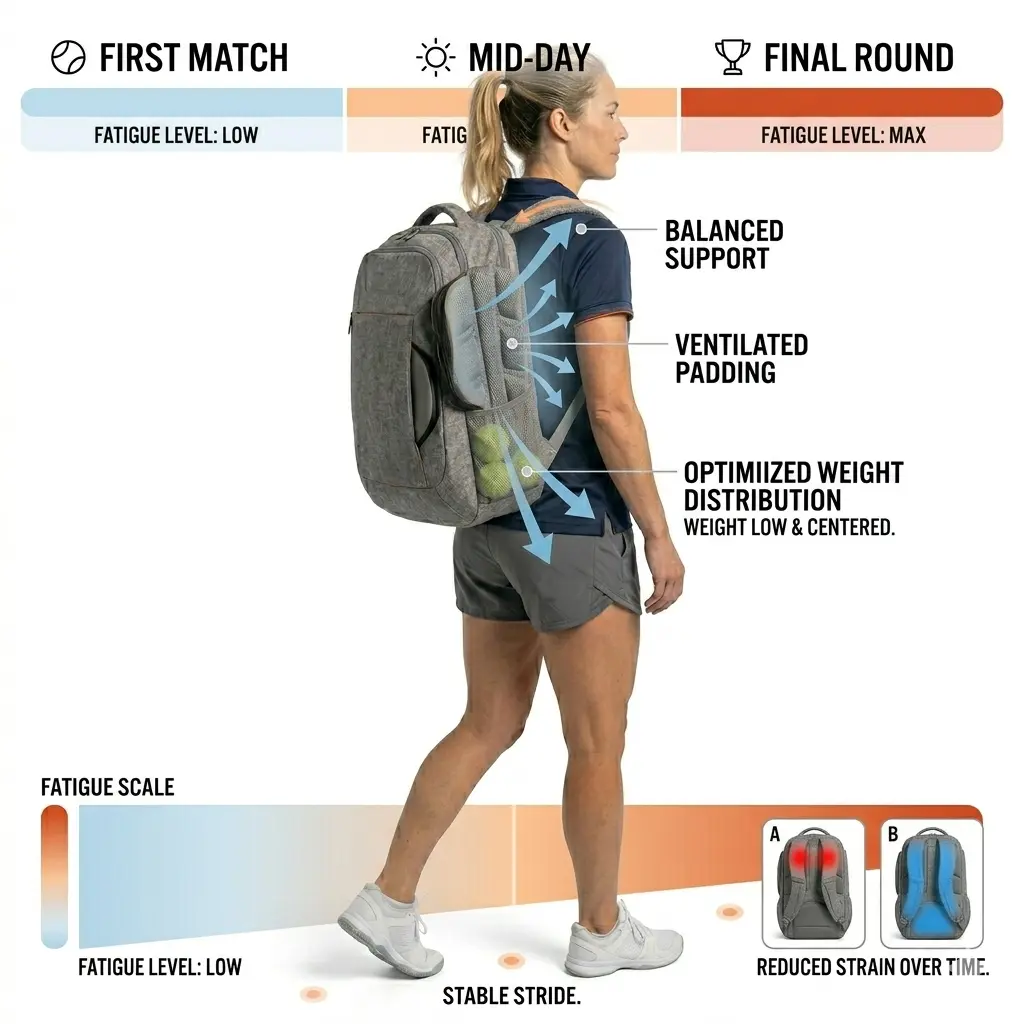
Real model walking with a pickleball bag featuring Fatigue Reduction design, balancing support, padding, and weight distribution to reduce strain over time, making the bag easier to carry from first match to final round.

Fatigue Reduction

By balancing support, padding, and weight distribution, we reduce strain over time so the bag feels easier to carry from the first match to the final round.
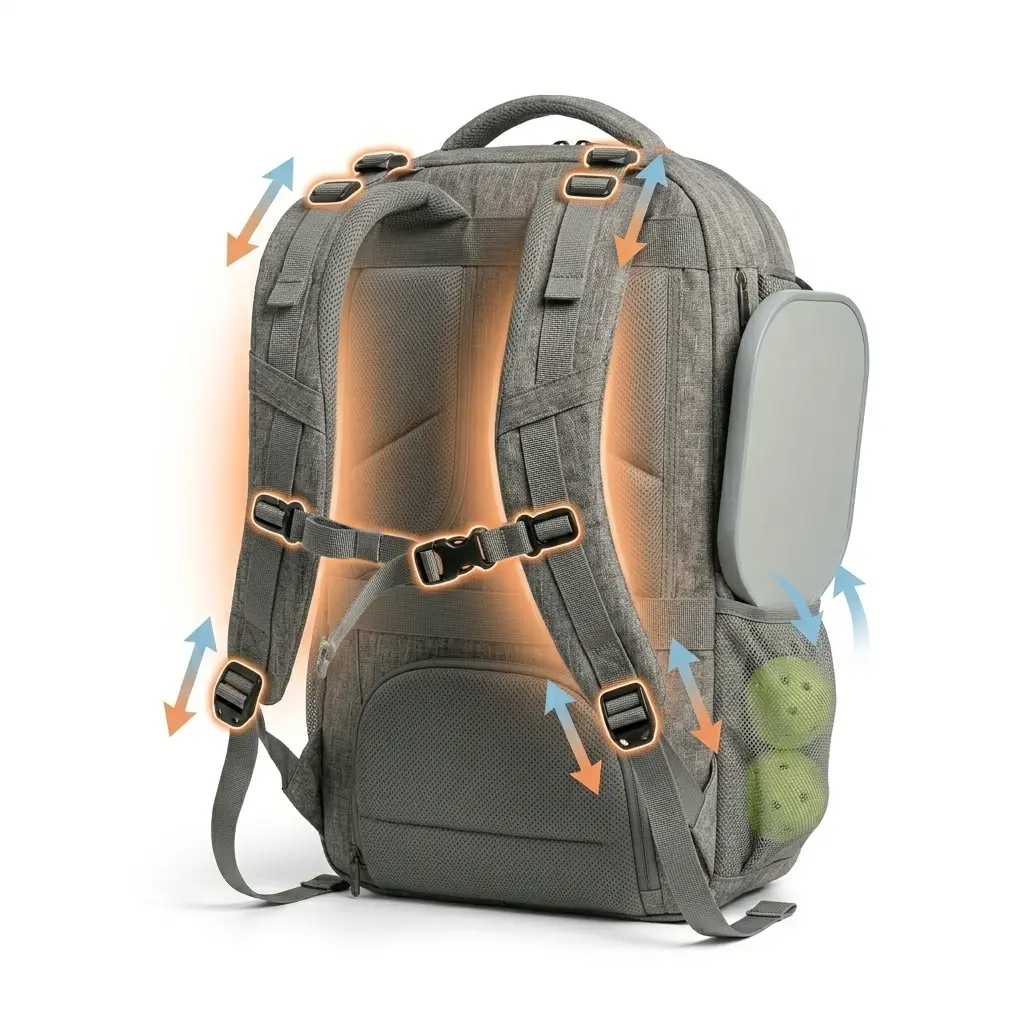
Key Comfort Features

Pickleball backpack with Quick‑Adjust Harness straps showing adjustment buckles and sliders, with paddles and balls visible, allowing users to quickly adjust fit and carry balance on the move as conditions, load, or travel needs change.

Quick‑Adjust Harness

Straps can be adjusted quickly on the move, helping users fine-tune fit and carry balance as conditions, load, or travel needs change throughout the day.
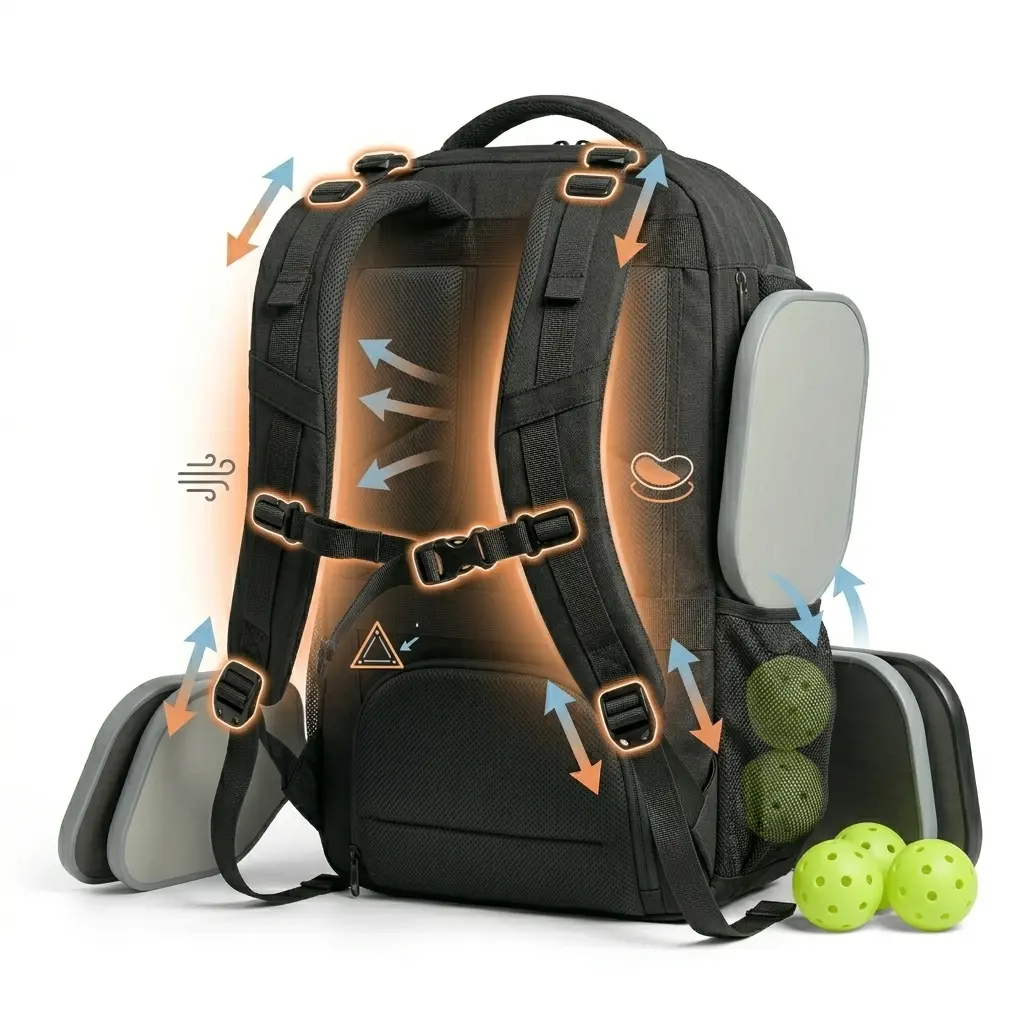
BLACK pickleball backpack with Modular Back System back panel showing adaptable structure for comfort, airflow, and stability, with paddles and balls placed next to the bag, supporting multiple use cases.

Modular Back System

The back panel is designed to support different carrying needs with a structure that can be adapted for comfort, airflow, and stability across multiple use cases.
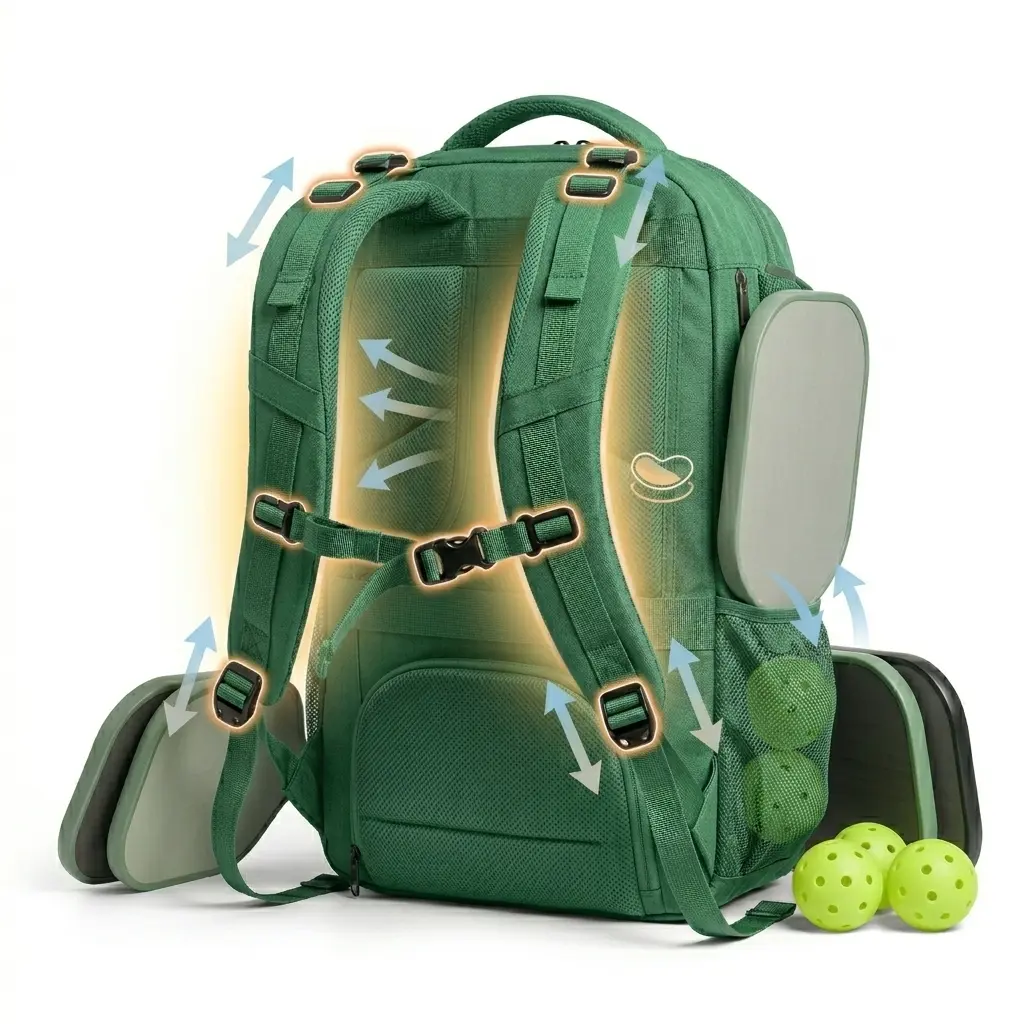
GREEN pickleball backpack with All‑Day Climate Control breathable materials and airflow design showing mesh panels and heat reduction, with paddles and balls placed next to the bag, keeping carry comfortable during long tournaments and warm conditions.

All‑Day Climate Control

Breathable materials and airflow-friendly construction help reduce heat build-up, keeping the carry experience more comfortable during long tournaments and warm conditions.
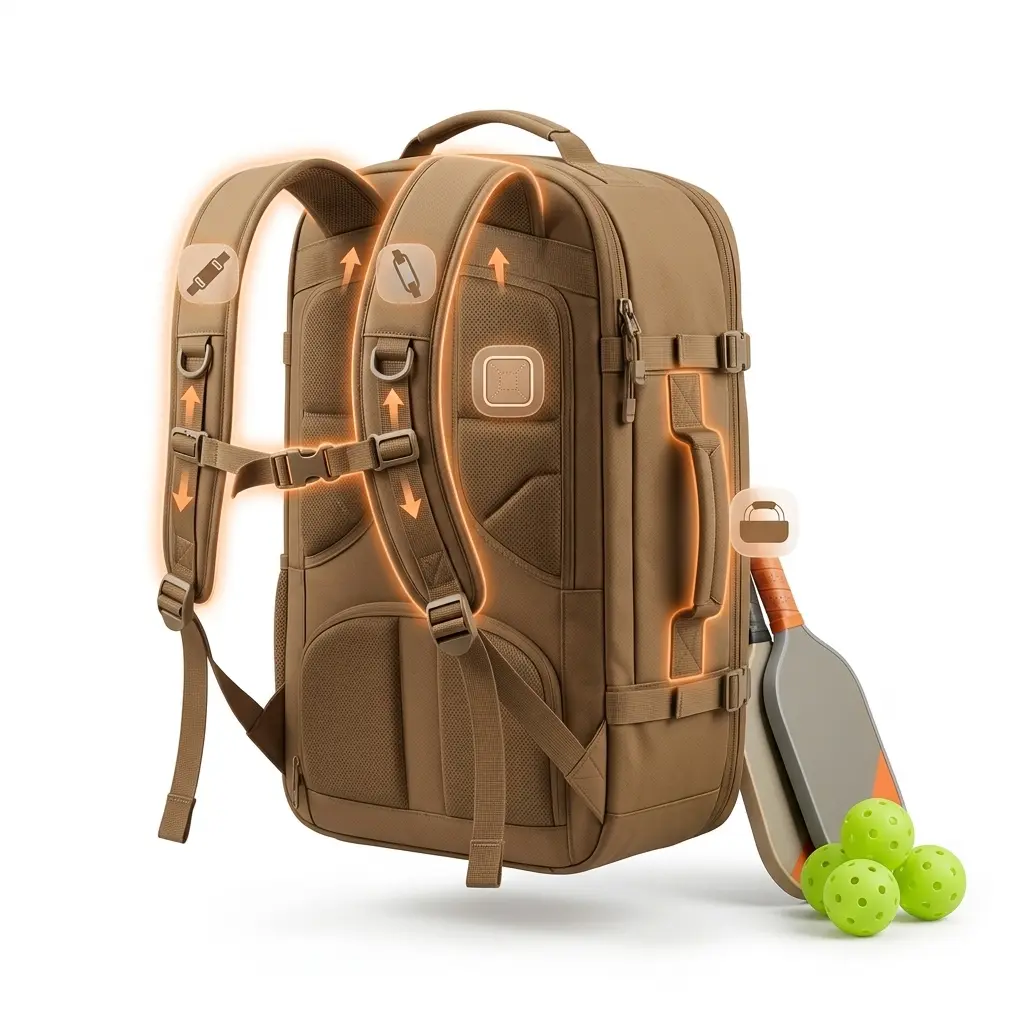
DESERT BROWN pickleball backpack with Customizable Contact Points showing adjustable shoulder straps, back padding, and grip areas that can be tuned for different user preferences, with paddles and balls next to the bag, creating a personal and comfortable carry feel.

Customizable Contact Points

Shoulder straps, back padding, and grip areas can be tuned to match different user preferences, helping create a more personal and comfortable carry feel.

Feature HG Professional Series Standard Market Bags
Ergonomic Carry Padded, load-balanced straps Basic single-strap design
Weight Distribution Engineered for long-day use Heavy, uneven pressure
Material Durability Water-resistant, reinforced base Standard nylon
Paddle Protection Shock-absorbent padded sleeve Minimal protection
Versatility Office, Court, & Travel Court use only

Ergonomics & Weight FAQ

1. How do you decide the optimal weight distribution for a bag?+
We start from real usage scenarios: what users carry, how much they carry, and how long they carry it. We optimize weight distribution in key areas (shoulder straps, back panel, bottom), keeping the center of gravity closer to the body to reduce pressure on shoulders and back. This balance is validated through ergonomic engineering, not arbitrary design.
2. What should be the target self-weight for a backpack?+
For daily use and moderate load, we recommend backpack self-weight between 0.8–1.2kg; for high-intensity use and heavy load, we use more robust materials, self-weight may be 1.2–1.8kg. The key is balancing durability and weight, ensuring the bag is not too light and less durable, nor too heavy and uncomfortable for long-term use.
3. How do shoulder straps and back panel design affect comfort?+
Shoulder strap width, thickness and curvature directly affect shoulder pressure distribution; back panel cushioning and breathability affect back comfort and long-term use experience. We design different shoulder strap and back panel specifications based on load weight and usage duration: wider and thicker straps for heavy load, lighter and more breathable back panel for daily use.
4. What should be the load capacity for a bag?+
For player bags, we design load capacity of 3–6kg (including 3–4 paddles and personal items); for coach bags, 6–10kg (including multiple paddles and training equipment); for staff bags, 4–8kg (including credentials, tools and event materials). Load capacity is directly related to material strength, shoulder strap design and structural balance, and we determine based on actual usage needs.
5. How do you balance durability and lightweight?+
We use high-durability materials in key areas (bottom, zippers, shoulder straps) and lighter materials in non-key areas (back panel, side walls). This layered design keeps the bag durable without unnecessarily increasing weight. We also provide different weight-level material options based on target price and load requirements.
6. For long-term bag carrying, how do you reduce body pressure?+
We reduce body pressure through three optimizations: center of gravity closer to the body, shoulder strap width distributing pressure, and back panel cushioning protecting the back. For long-term carrying (such as events, travel), we recommend using wider shoulder straps (≥5cm) and thicker back panel cushioning (≥1cm), and ensuring the bag's center of gravity is above the waist.
7. How does ergonomics design differ for different age users?+
For the main user group aged 30–60, we design moderate shoulder strap width, back panel cushioning and weight distribution, balancing comfort and durability. For younger users, we can use lighter materials and more modern designs; for older users, we use wider shoulder straps and thicker cushioning to reduce body pressure.
8. How do we start a project focused on ergonomics and weight?+
You can use the form on this page to tell us your target users, carrying duration, load weight and brand positioning. We will provide structure solutions, weight optimization plans and construction details based on your needs, helping your brand start from ergonomic design and build a comfortable, reliable product line.

Common Questions About Ergonomics & Weight
Engineered for comfort during long days on court.
What is the minimum order quantity (MOQ) for ergonomic pickleball bags with custom logo and color options?
Our standard MOQ for custom orders is 100 units, allowing you to support your market testing with low capital risk.
Can I request a sample of your ergonomic pickleball bags before placing a large order?
Yes, we offer a sample policy where you can request a sample bag for $50. This fee is refundable upon order placement. Please allow 3-5 business days for sample delivery.
How long does it take to produce and ship ergonomic pickleball bags after final design approval and deposit receipt?
Our production lead time for ergonomic pickleball bags is 45 days from final design approval and deposit receipt. We then ship via UPS/FedEx within 5 business days of production completion.
Can I customize the ergonomic pickleball bags with our team logo and specific colors?
Yes, we offer customization options for ergonomic pickleball bags, including team logos, colors, and other branding elements. Please contact our sales team to discuss your specific requirements and pricing.
What certifications and warranty do your ergonomic pickleball bags carry?
All our products are ISO 9001/BSCI certified and backed by a 1-year quality assurance warranty, ensuring peace of mind for our US clients.

By aligning fabrics, reinforcements, and hardware with real tournament use, we help your bags stay in service longer and keep your brand looking strong on court, in transit, and in photos.

Ready to build a collection that truly stands up to long-term use? Talk with us about your next season or event program.

Start your durability‑focused project →

Start Your Ergonomics & Weight Project Now

We help brands design bags with balanced weight distribution and ergonomic support for comfortable carrying during long days and frequent use. Tell us your target users, carrying duration, load weight and brand positioning, and we will provide structure solutions, weight optimization plans and production details tailored to your needs.

✉️ Email: zzhi31920@gmail.com
💬 WhatsApp: +86 139 2290 2634

Subscribe to our newsletter

Contact us if you have any questions →