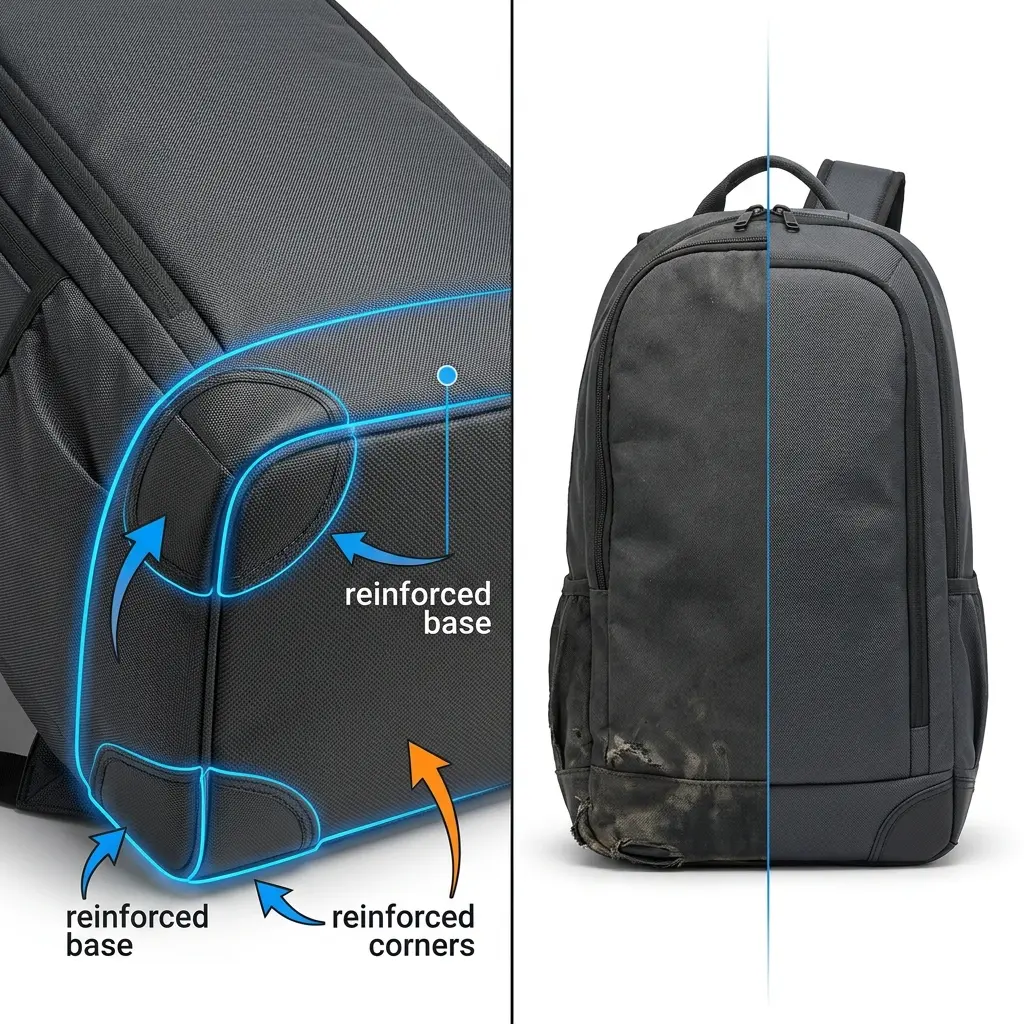
Reinforced Bases & Corners
High-wear zones on the bottom and corners are built to handle rough surfaces, frequent setting down, and repeated loading.
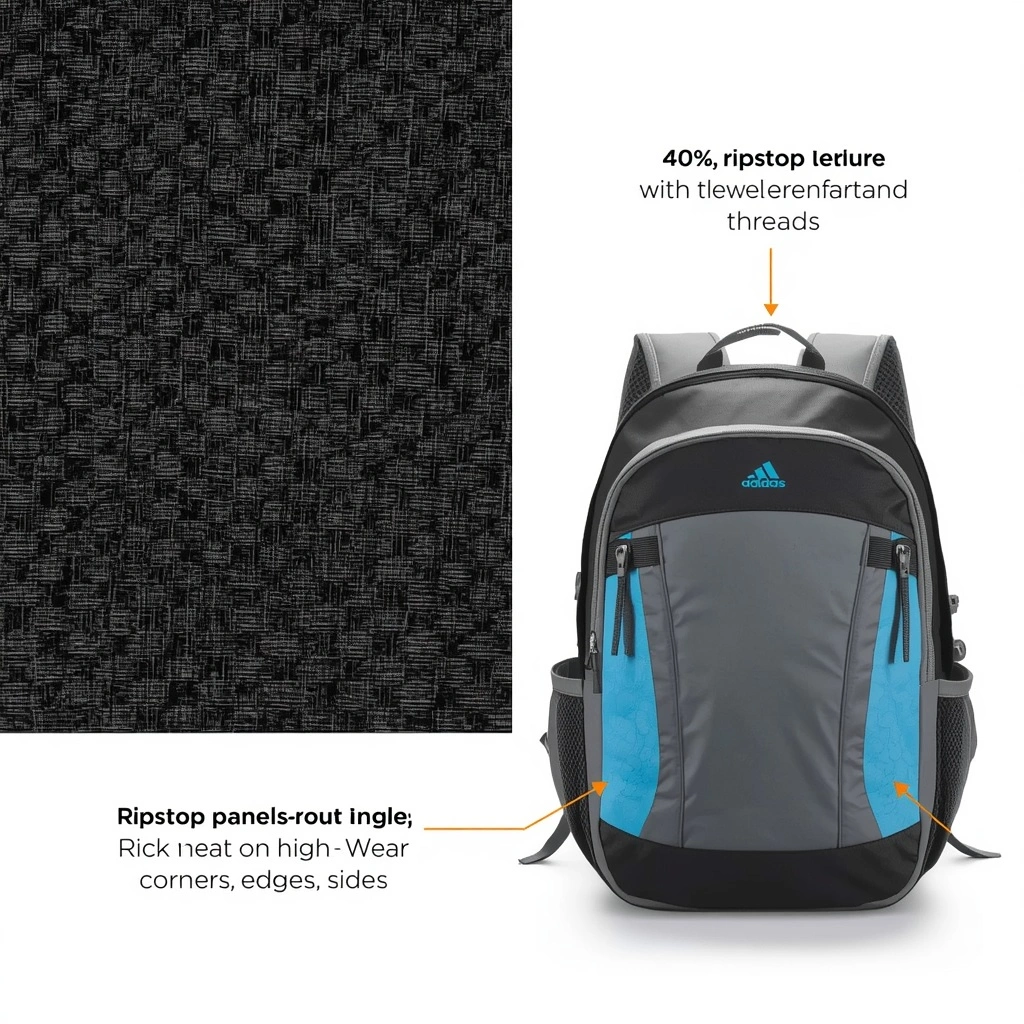
Tear-Resistant Panels
Strategic use of tear-resistant fabrics helps protect against accidental snags and edge tears during transport and event setup.
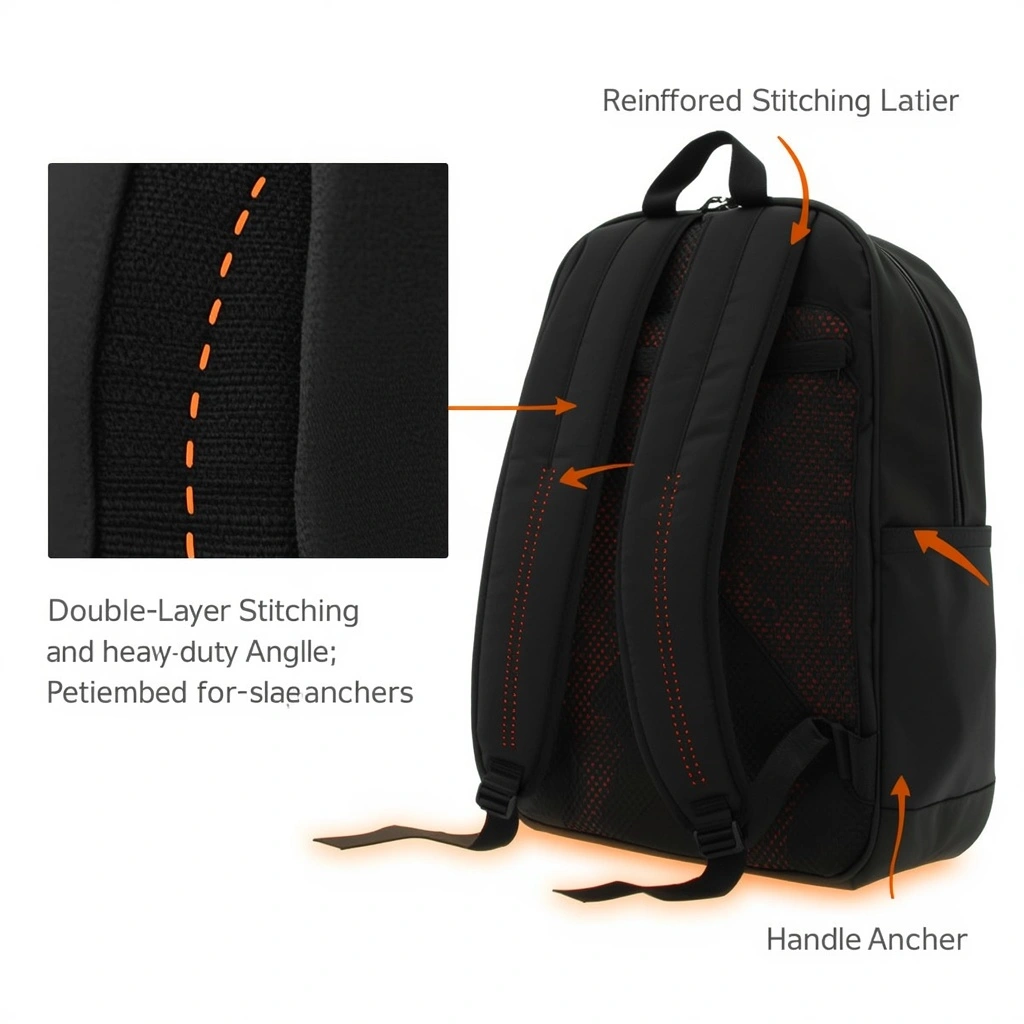
Secure Handle & Strap Anchors
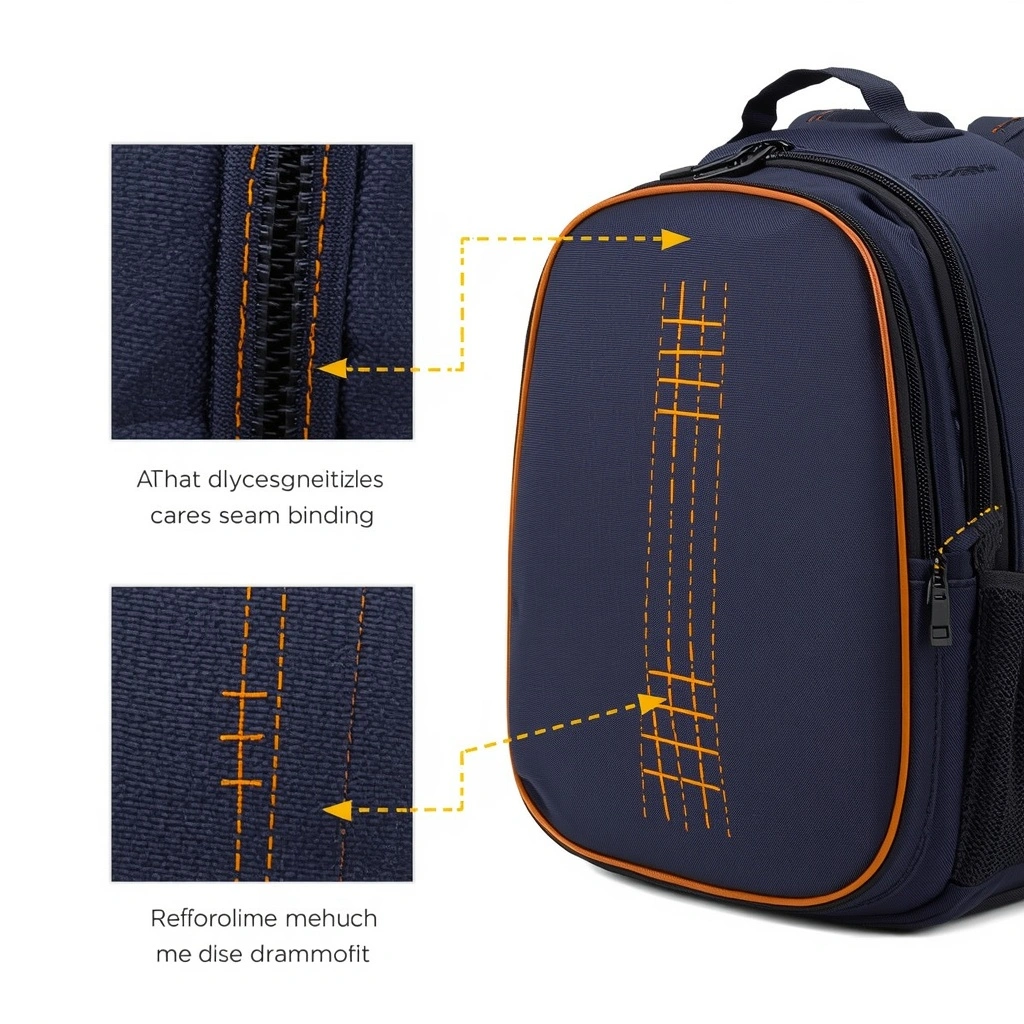
Handles and straps are anchored with reinforced stitching patterns so they remain secure even under full tournament loads.
Consistent Finish Quality
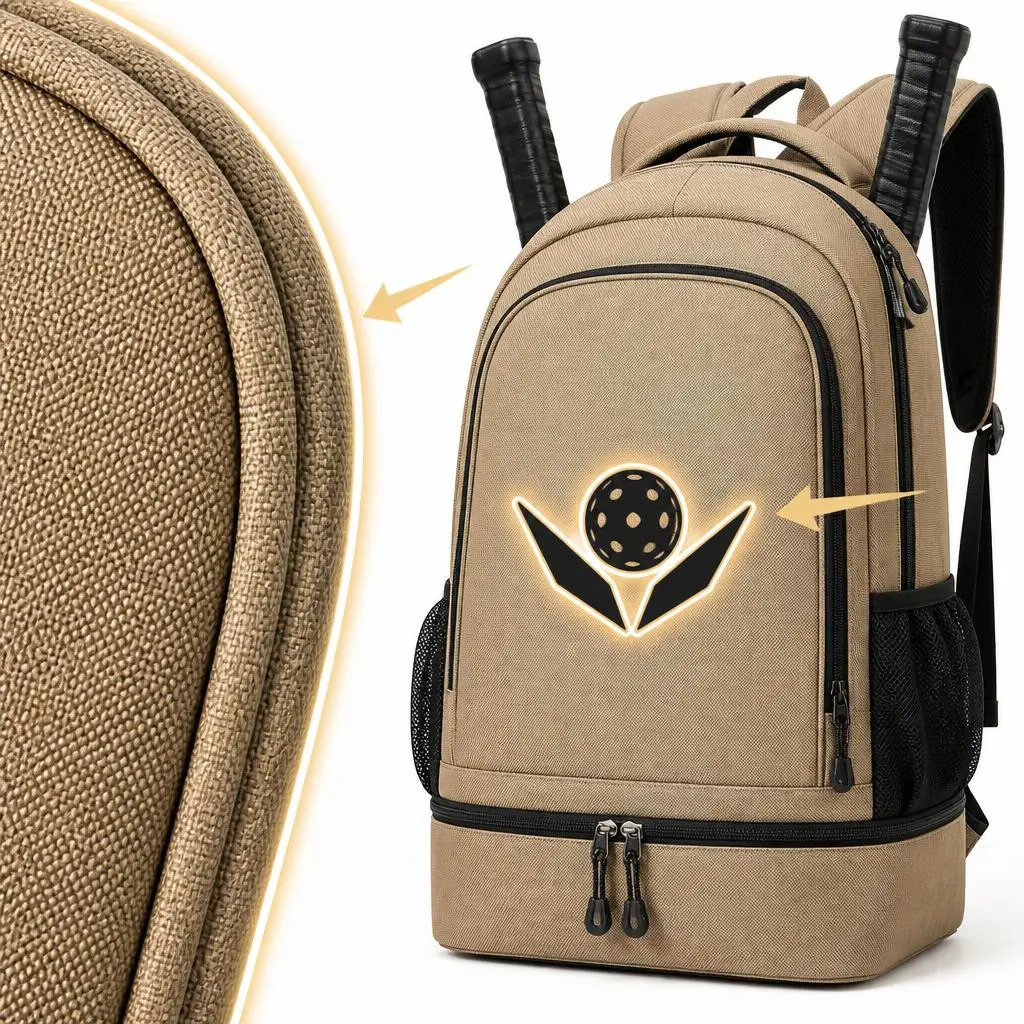
Edge binding, logo applications, and surface treatments are specified to maintain a clean, premium look across long-term use and multiple reorders.
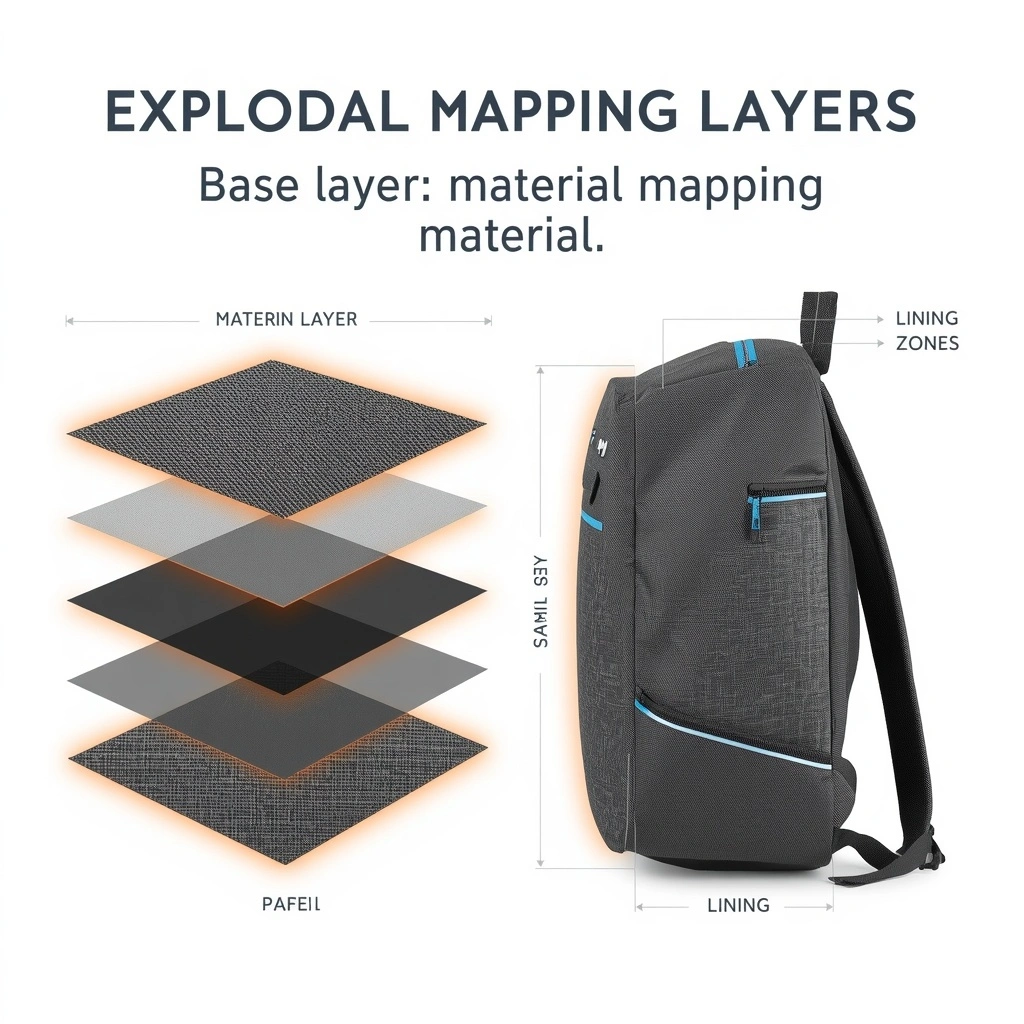
Use-Case Driven Material Mapping
We map where each material sits in the bag – from base to panels to linings – to ensure the right strength and flexibility in the right place.
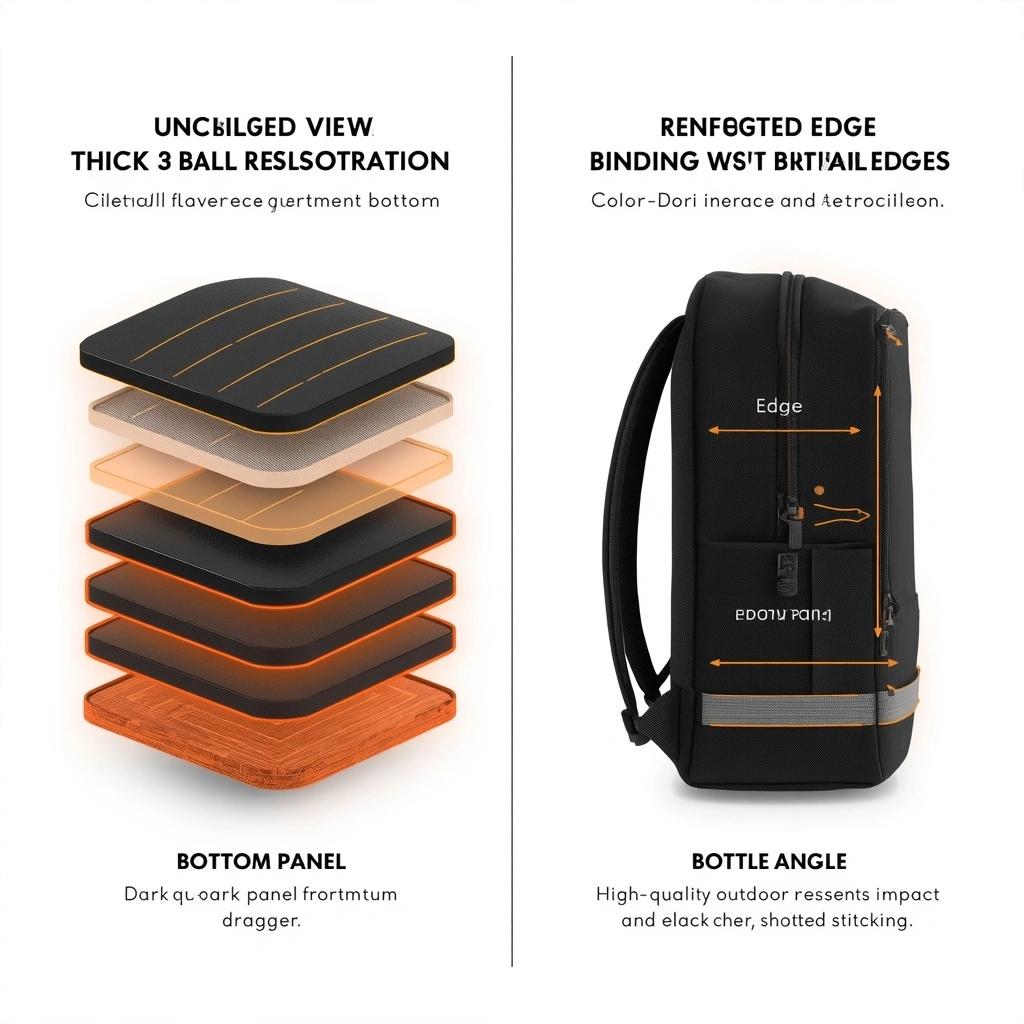
Layered Protection in High-Wear Areas
Bottom panels, wheel housings, and contact edges receive layered reinforcements to protect against dragging, impact, and repeated stacking.
Balanced Strength and Weight
We balance denier, coatings, and reinforcements so the bag feels robust without becoming unnecessarily heavy for players and staff.
Factory-Proven Constructions
Seam types, stitch densities, and reinforcement methods are chosen from constructions that have proven themselves across previous large-scale productions.
Choosing "strong" materials is not enough. We match fabrics, reinforcements, and hardware to how your bags will actually be used – who carries them, how often, and in what conditions. This lets us build solutions that feel premium on day one and still look and perform like your brand after repeated tournaments and seasons.
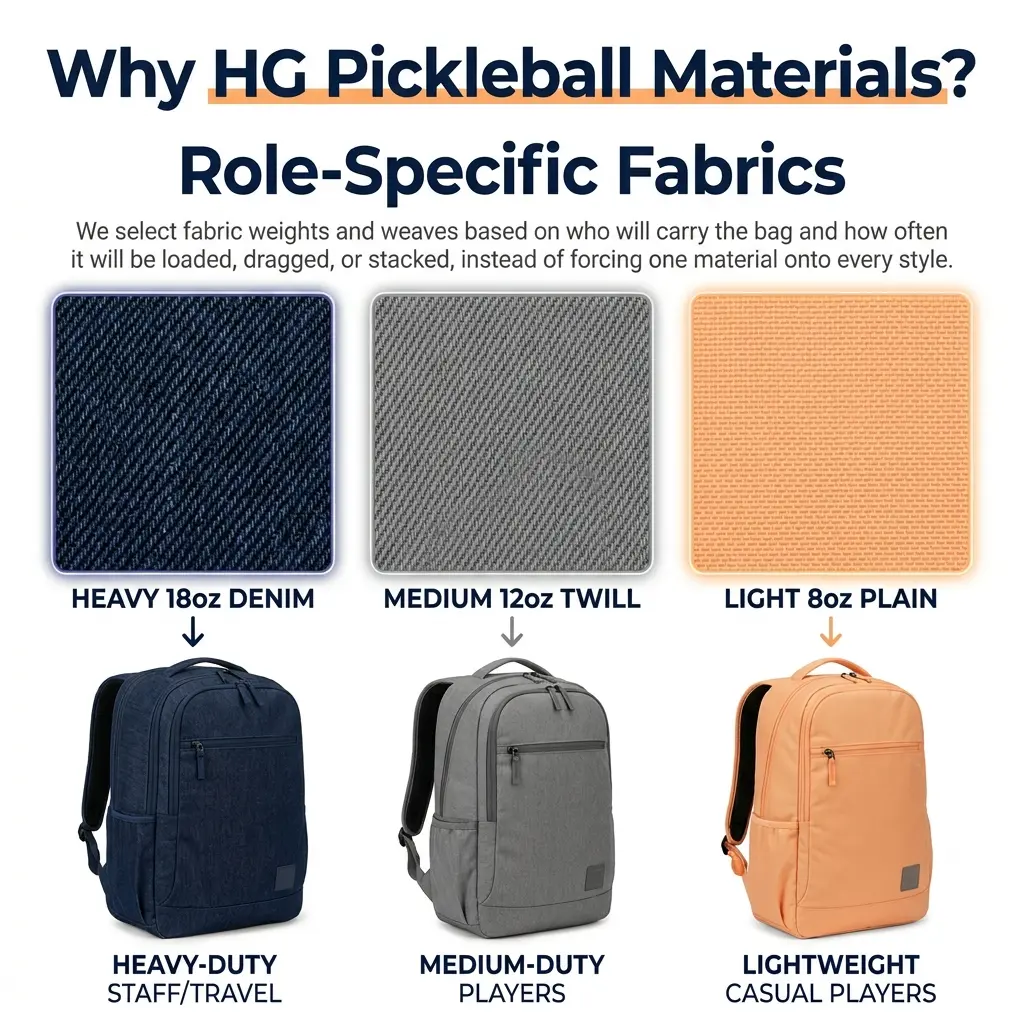
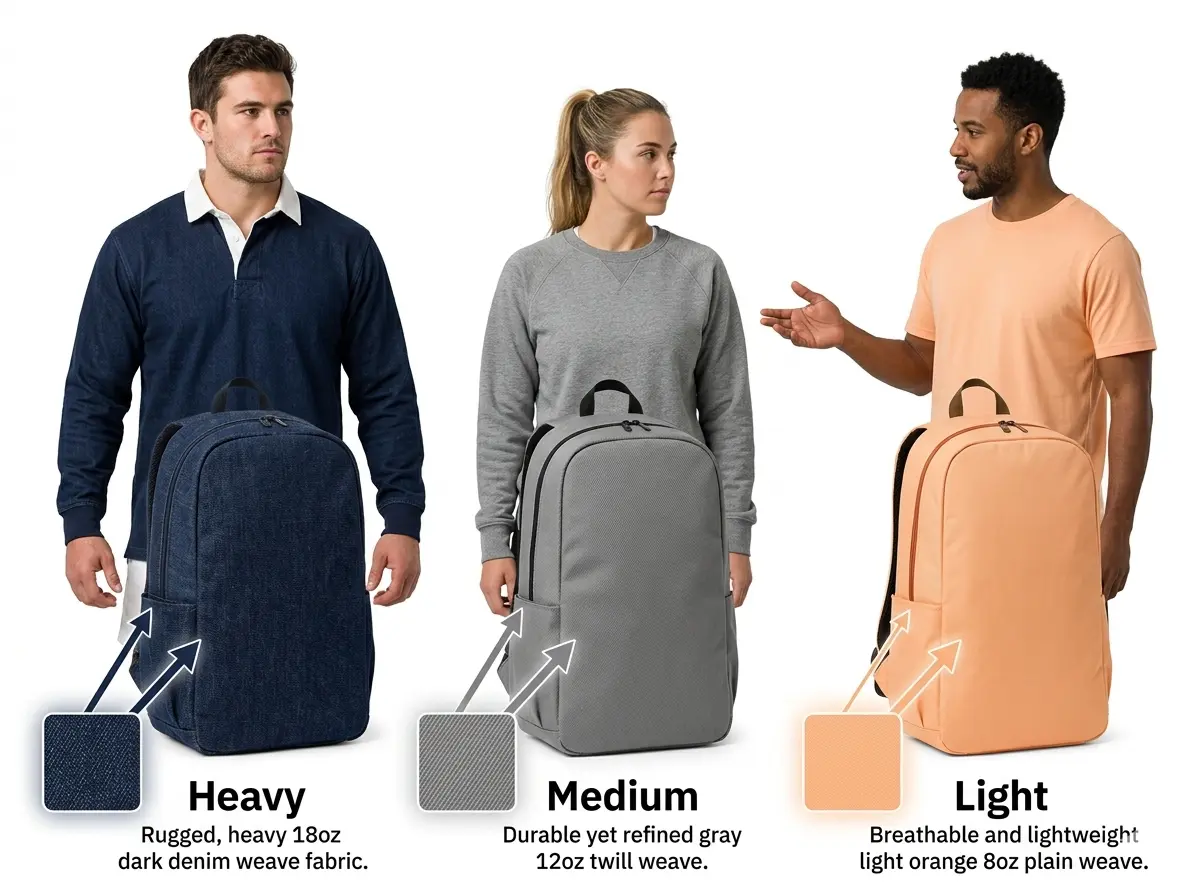
Role-Specific Fabrics
We select fabric weights and weaves based on who will carry the bag and how often it will be loaded, dragged, or stacked, instead of forcing one material onto every style.
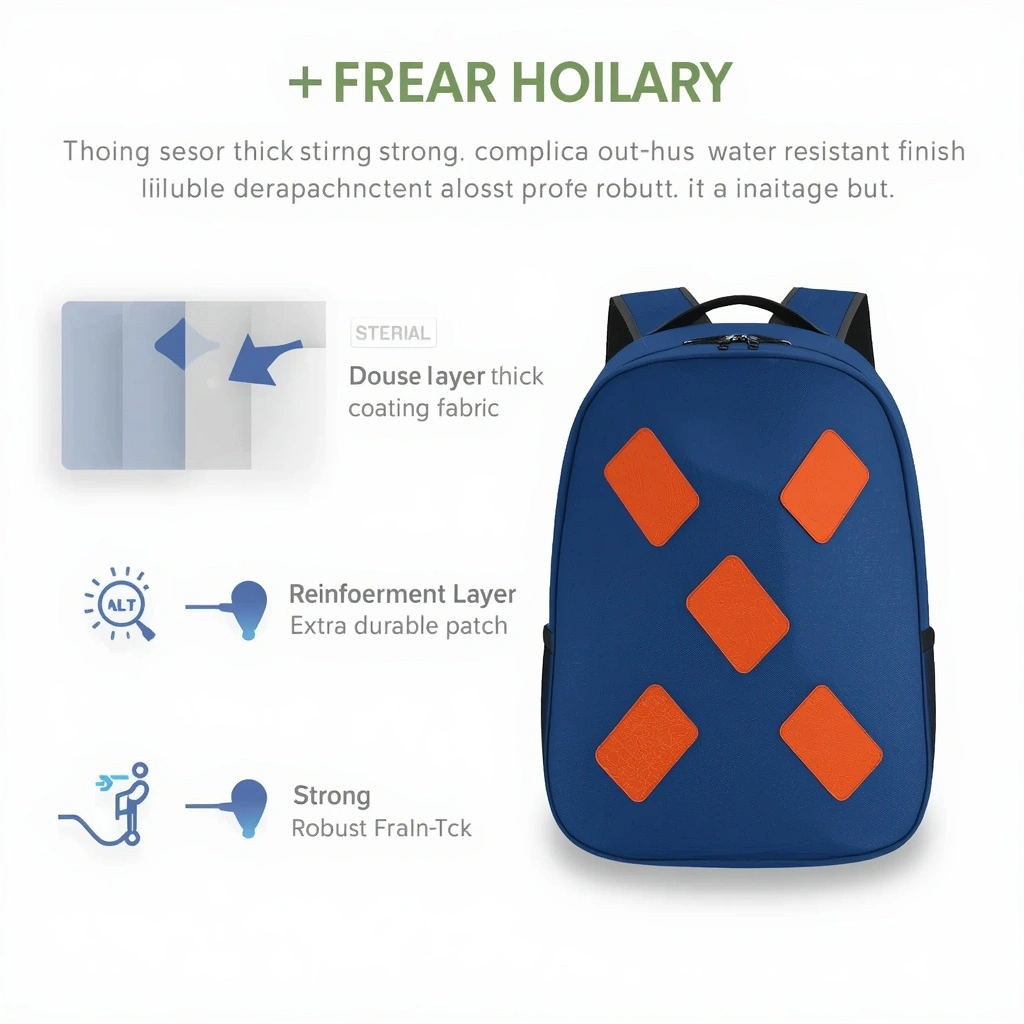
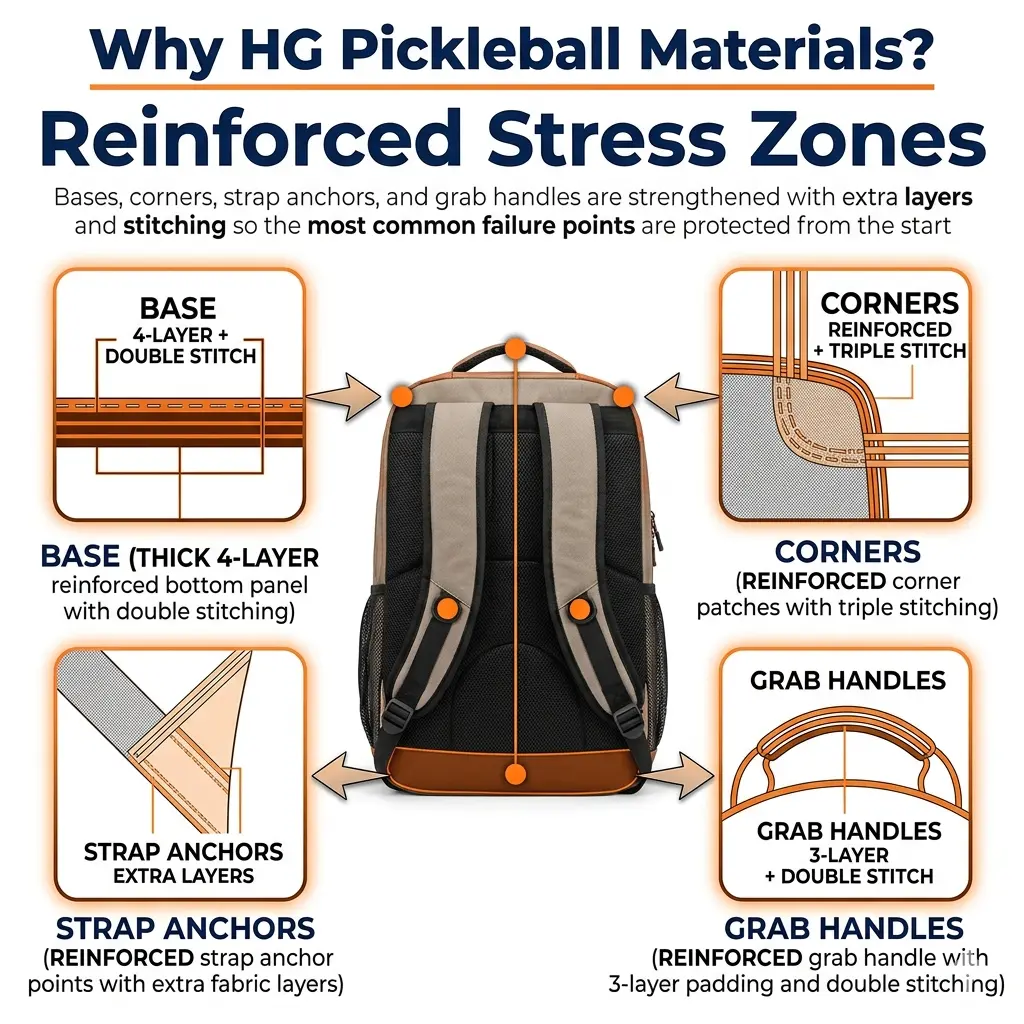
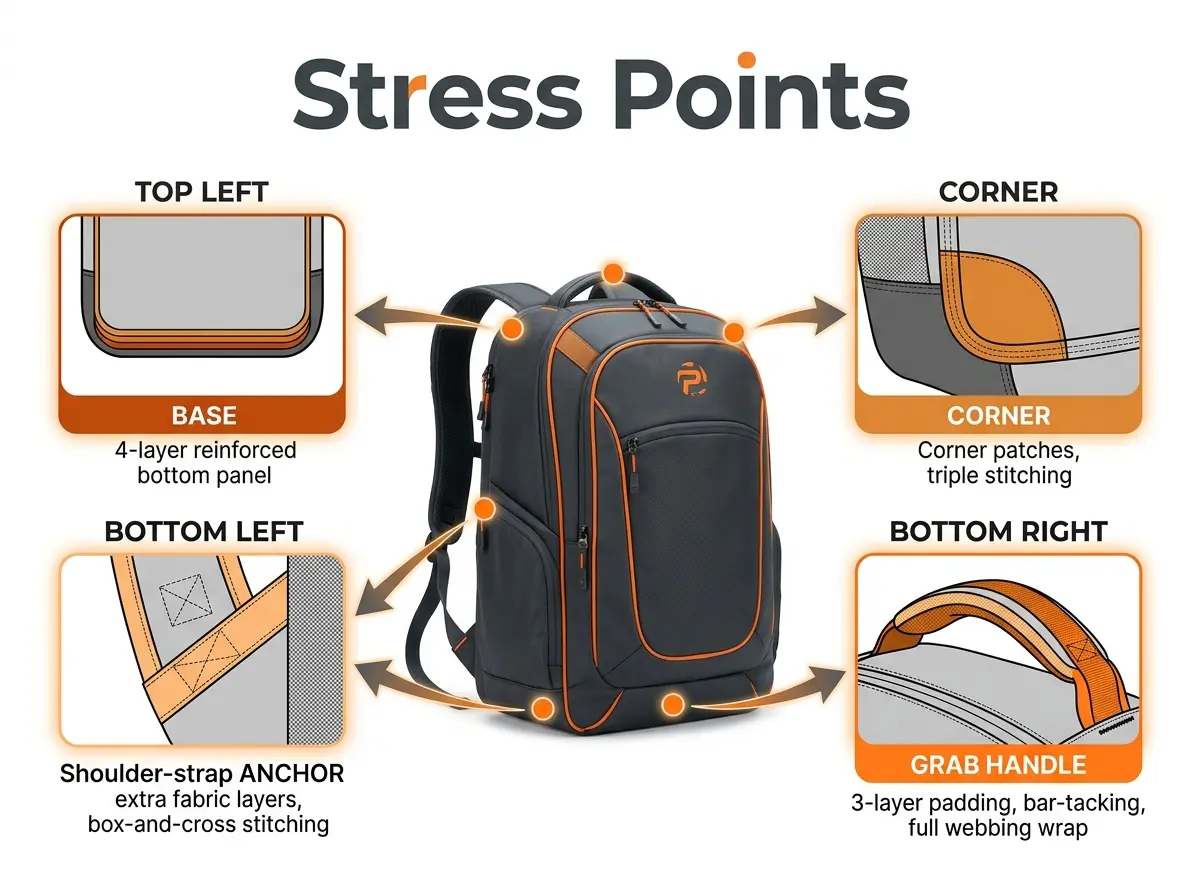
Reinforced Stress Zones
Bases, corners, strap anchors, and grab handles are strengthened with extra layers and stitching so the most common failure points are protected from the start.
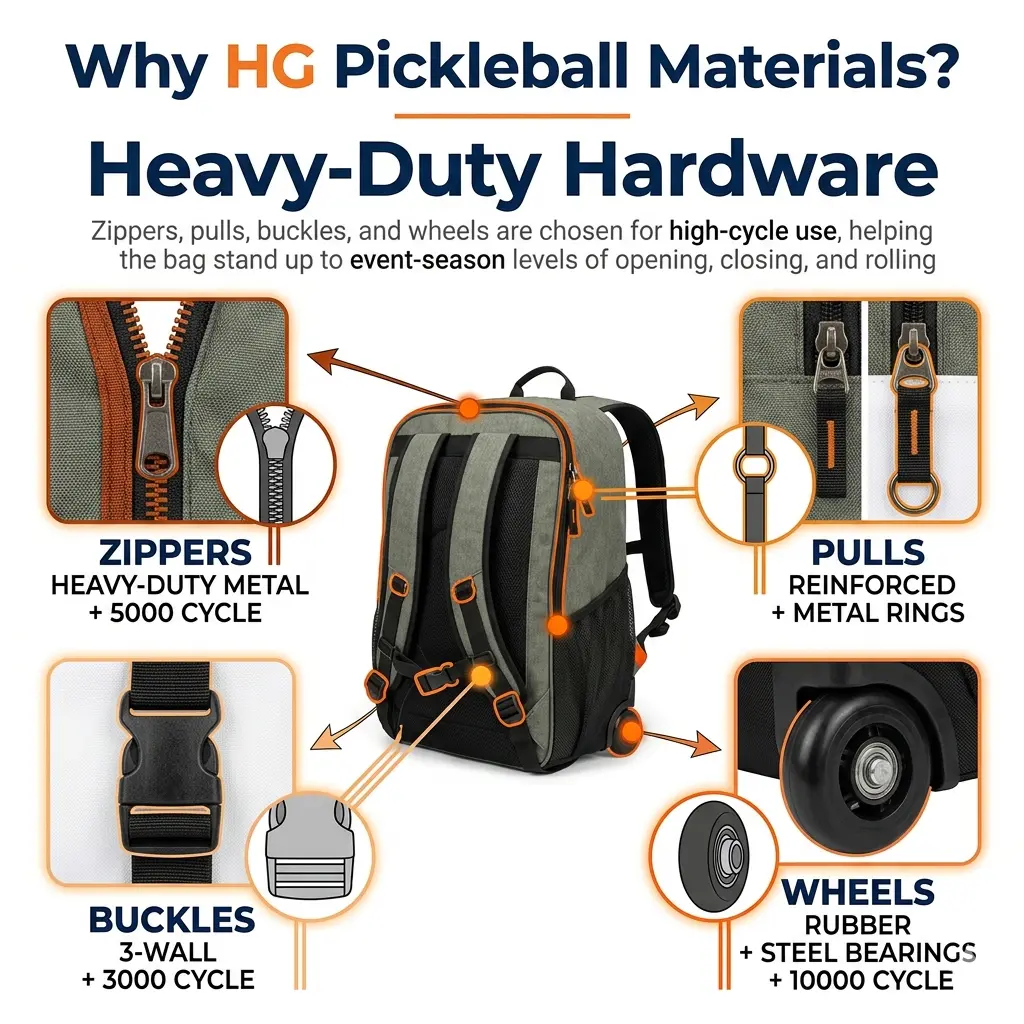
Heavy-Duty Hardware
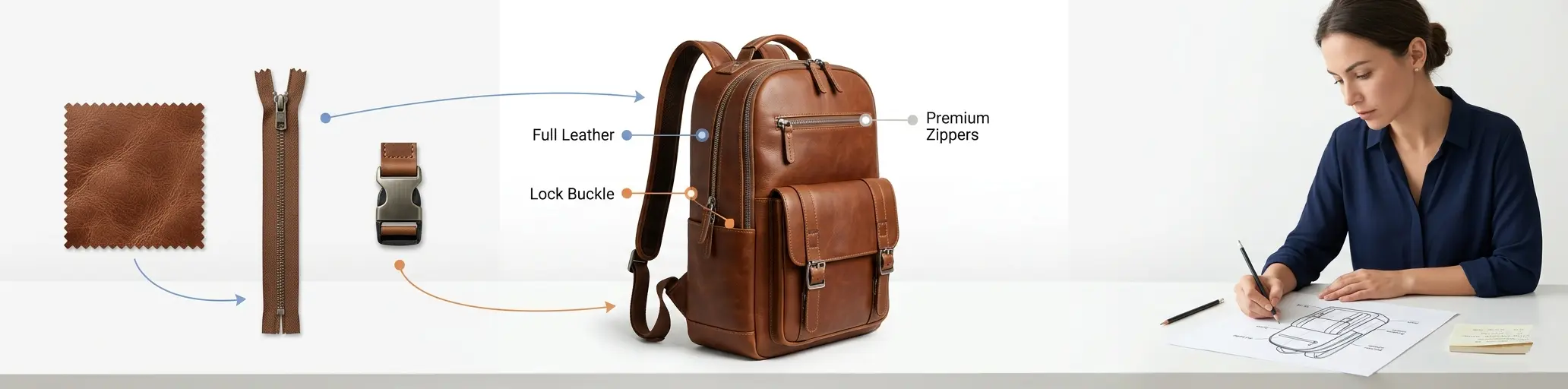
Zippers, pulls, buckles, and wheels are chosen for high-cycle use, helping the bag stand up to event-season levels of opening, closing, and rolling.
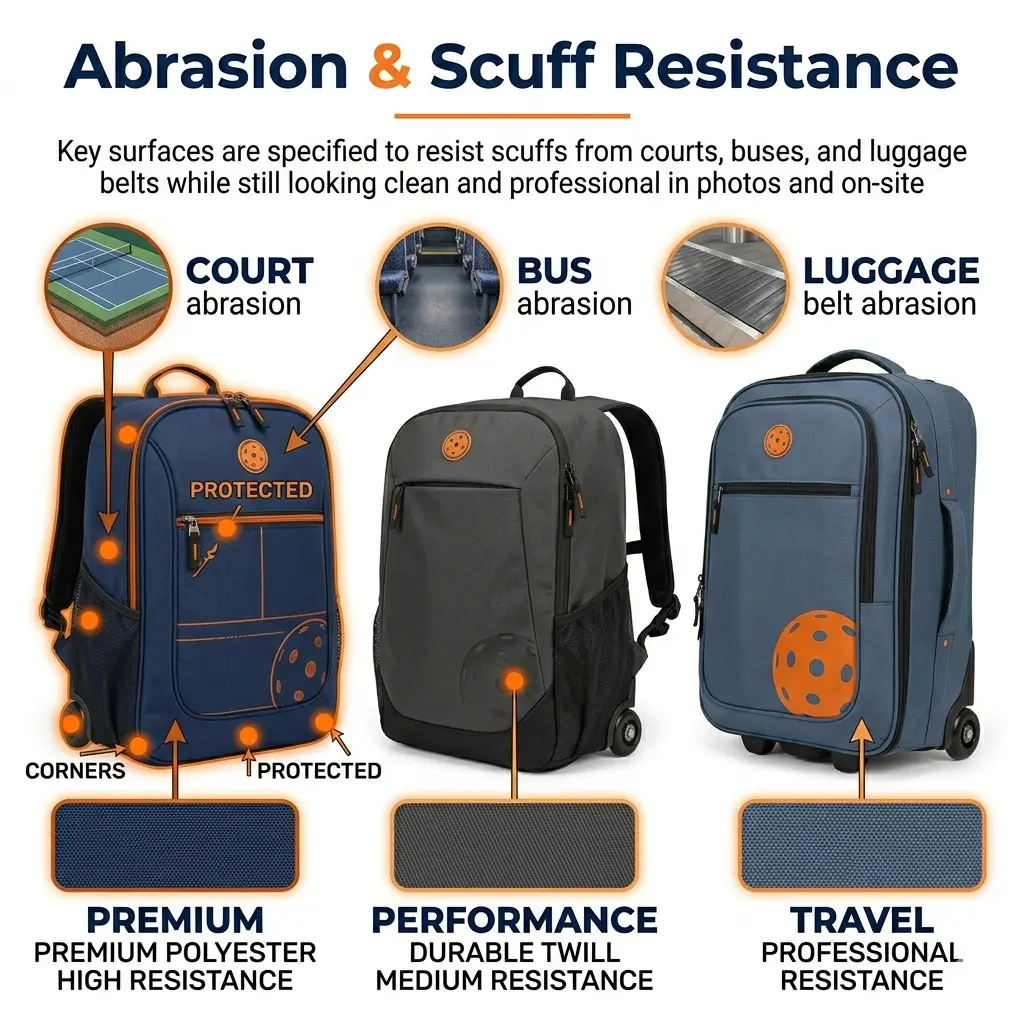
Abrasion & Scuff Resistance
Key surfaces are specified to resist scuffs from courts, buses, and luggage belts while still looking clean and professional in photos and on-site.
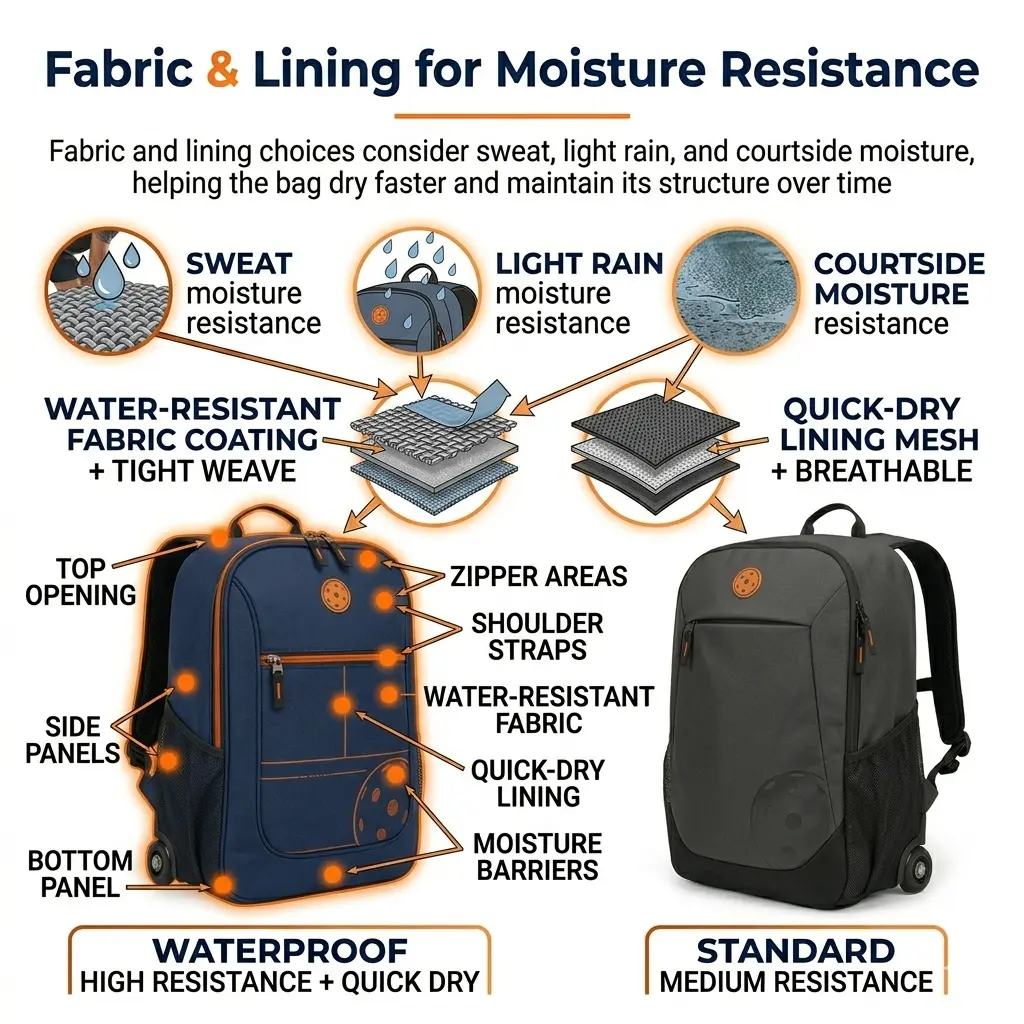
Moisture-Aware Construction
Fabric and lining choices consider sweat, light rain, and courtside moisture, helping the bag dry faster and maintain its structure over time.
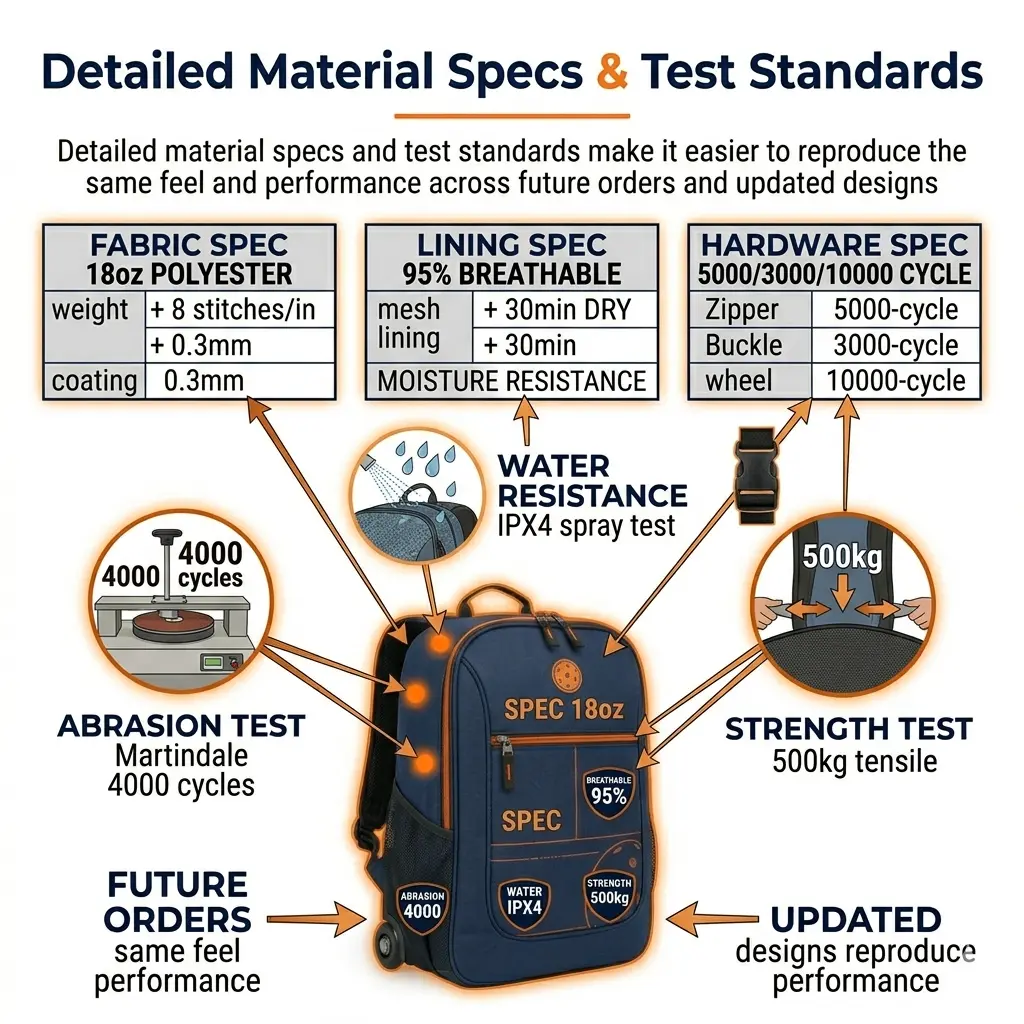
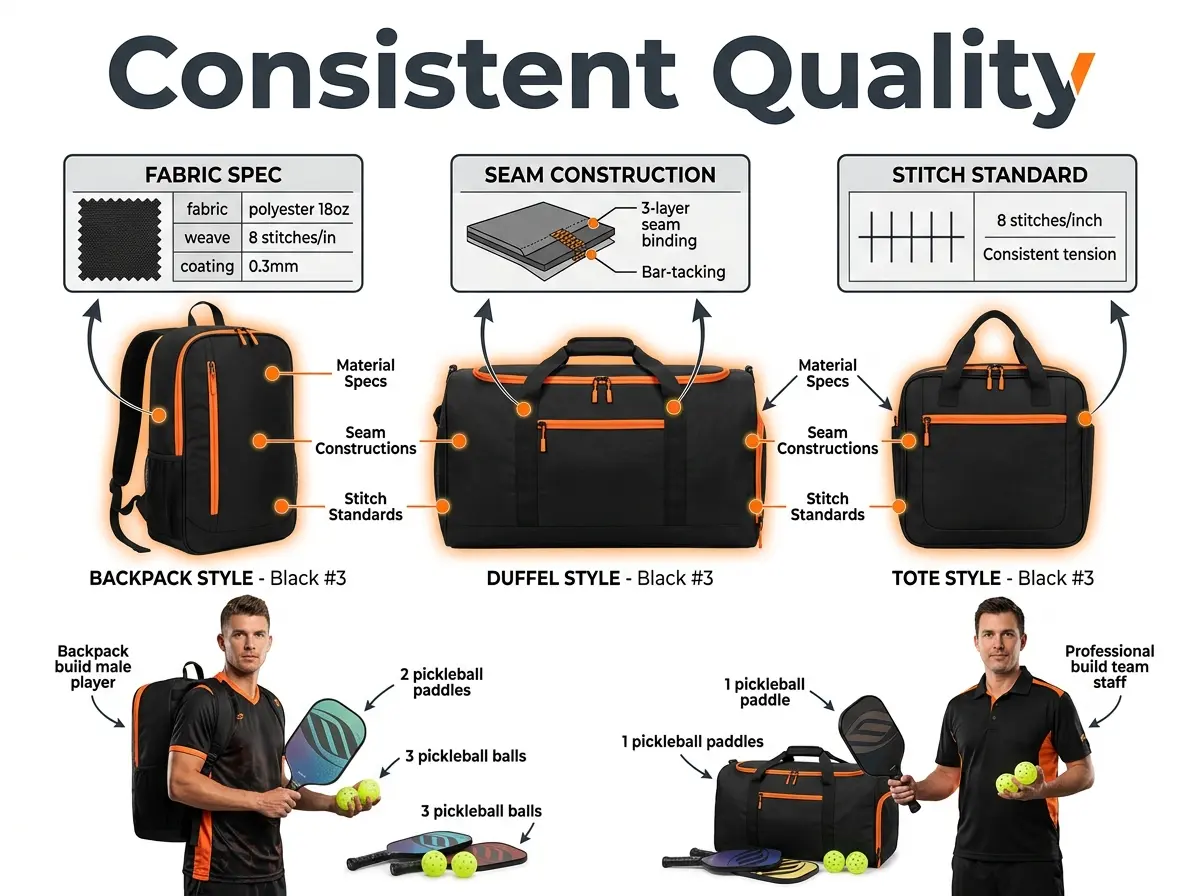
Repeatable Quality Specs
Detailed material specs and test standards make it easier to reproduce the same feel and performance across future orders and updated designs.
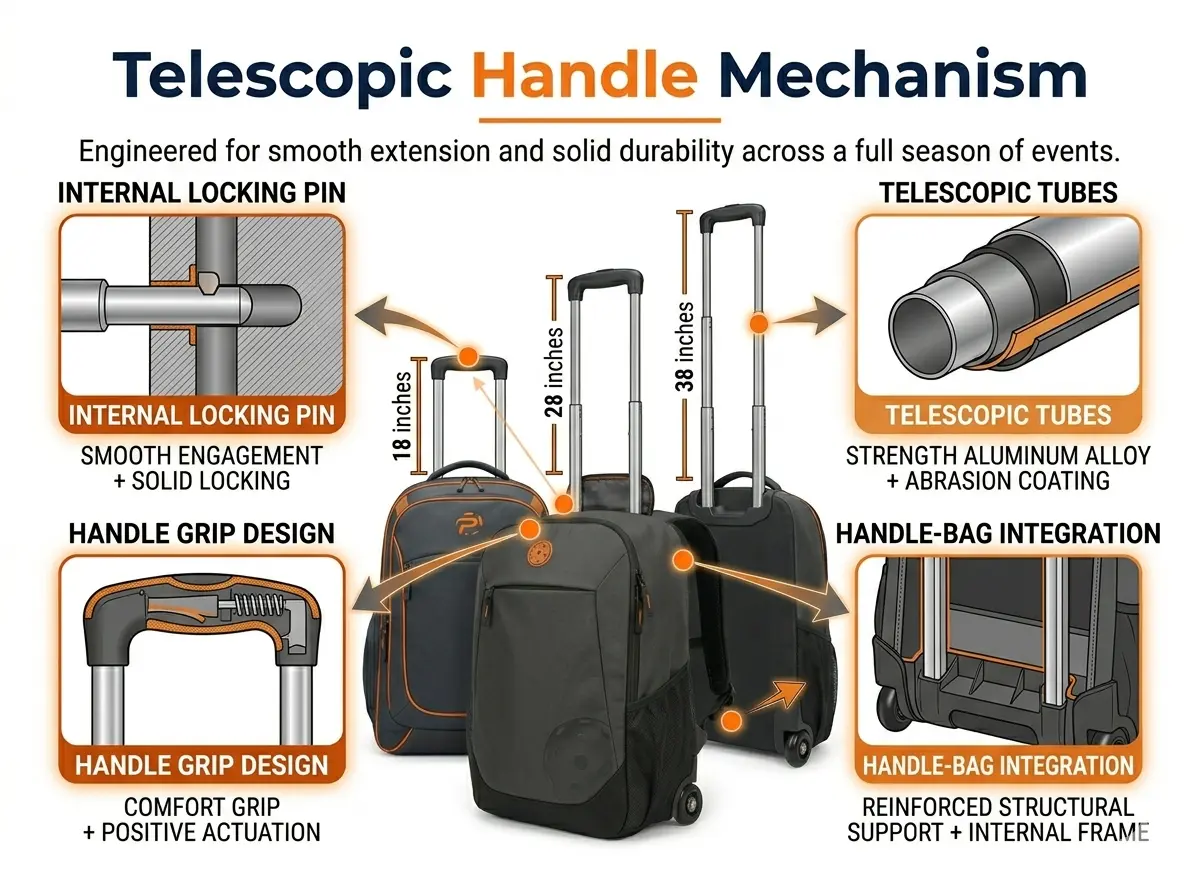
Section 3 – Hardware ready for repeat use
Zippers, pulls, buckles, adjusters, wheels, and telescopic handles work harder than any fabric. We specify components that can handle high-frequency opening, closing, tightening, and rolling across a full season of events. The goal is simple: hardware that feels smooth and confident on day one, and still feels solid and reliable after months of real use.
1. What materials do you recommend for durable pickleball bags?−
We recommend materials based on the bag’s role, expected load, and usage frequency. Player bags may use lighter performance fabrics, while staff, duffel, and wheeled bags usually benefit from heavier, more abrasion-resistant constructions. The goal is to balance durability, appearance, and weight so the bag performs well across a full season of use.
2. How do you make the bags more durable?−
We strengthen the areas that fail first, such as bases, corners, strap anchors, and grab handles. These high-stress zones are reinforced with extra layers, bar-tacking, or webbing wraps to help the bag keep its shape and resist wear over time. We also choose hardware and fabrics that can handle repeated opening, closing, and carrying.
3. Can you customize the materials for different bag styles?−
Yes. We can match different fabrics, coatings, linings, and reinforcements to each bag style. For example, a player backpack may use lighter materials, while a tournament duffel or wheeled bag may need a tougher outer shell and stronger internal structure. This helps each product fit its actual use case.
4. What hardware do you use for your bags?−
We select hardware such as zippers, buckles, pulls, adjusters, wheels, and telescopic handles based on the demands of the product. Components are chosen for smooth operation and repeat use, so they remain reliable through frequent event-season handling. Hardware is also matched to the bag’s positioning and target market.
5. How do you ensure quality stays consistent across reorders?−
We use clear material specifications, stitch standards, reinforcement rules, and quality checkpoints for every project. That allows us to reproduce the same feel, look, and performance across future orders. Consistency is especially important for brands and tournament programs that need the same product to arrive season after season.
6. Are your bags suitable for outdoor events and travel?−
Yes. Our materials and constructions are selected with courtside use, travel, and repeated handling in mind. We consider scuffs, light moisture, loading and unloading, and other real-world conditions that tournament bags face. That helps the bags stay presentable and functional in more demanding environments.
7. Can you help us choose the right balance between durability and weight?−
Yes. This is one of the main parts of our development process. We help clients choose fabric weights, reinforcement levels, and hardware types that give the bag the strength it needs without making it unnecessarily heavy. The right balance depends on the end user, bag size, and target price point.
8. Do you provide samples before bulk production?−
Yes, we can develop samples so you can confirm the materials, construction, and overall quality before moving to mass production. Sampling is the best way to verify durability details such as reinforcement placement, hardware feel, and finish quality. It also helps reduce surprises during production.